Global Parcel Market 2025: Growth at Scale, Power in Few Hands
Global B2C e-commerce parcel volume reaches 121 billion shipments in 2025, growing by 10% year over year. At the same time, parcel volumes and delivery shares are unevenly distributed, with a small number of carriers and markets accounting for a large share of global e-commerce parcels.
Article in a Nutshell:
Global B2C e-commerce parcel volume reaches 121 billion shipments in 2025
Year-over-year growth amounts to 10%
Around 60% of global e-commerce parcels originate from China
Parcel delivery shares differ strongly between major parcel carriers
Market concentration varies significantly across parcel delivery markets
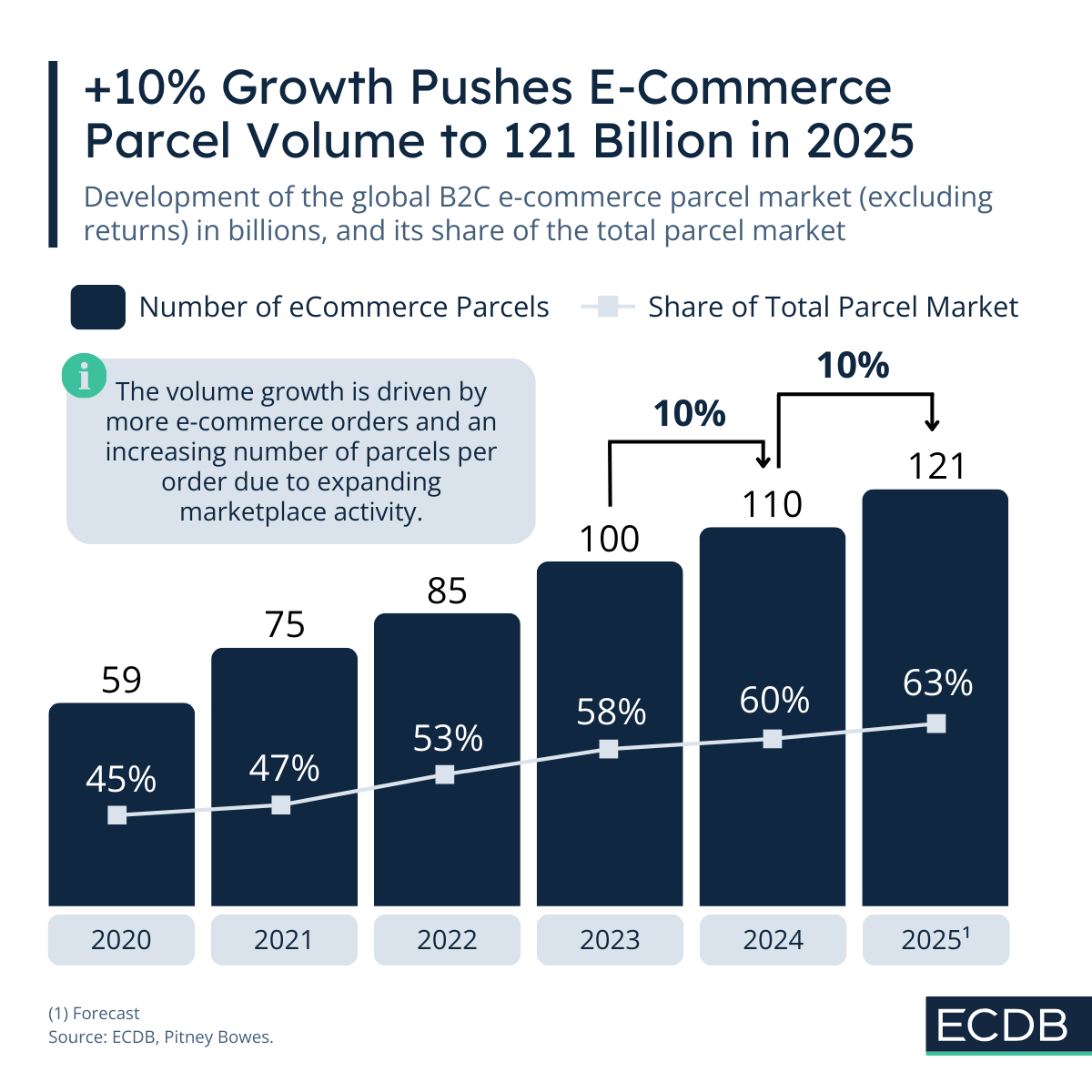
+10% Growth Pushes Global E-Commerce Parcel Volume to 121 Billion in 2025
The global parcel delivery market continues to expand. In 2025, global B2C e-commerce parcel volume is expected to reach 121 billion shipments, representing 10% year-over-year growth. The increase is driven by rising e-commerce order volumes and an increasing number of parcels per order. As marketplace activity expands, a growing share of consumer purchases results in multiple parcel shipments. In parallel, e-commerce parcels account for a rising share of the total parcel market, reaching 63% in 2025.
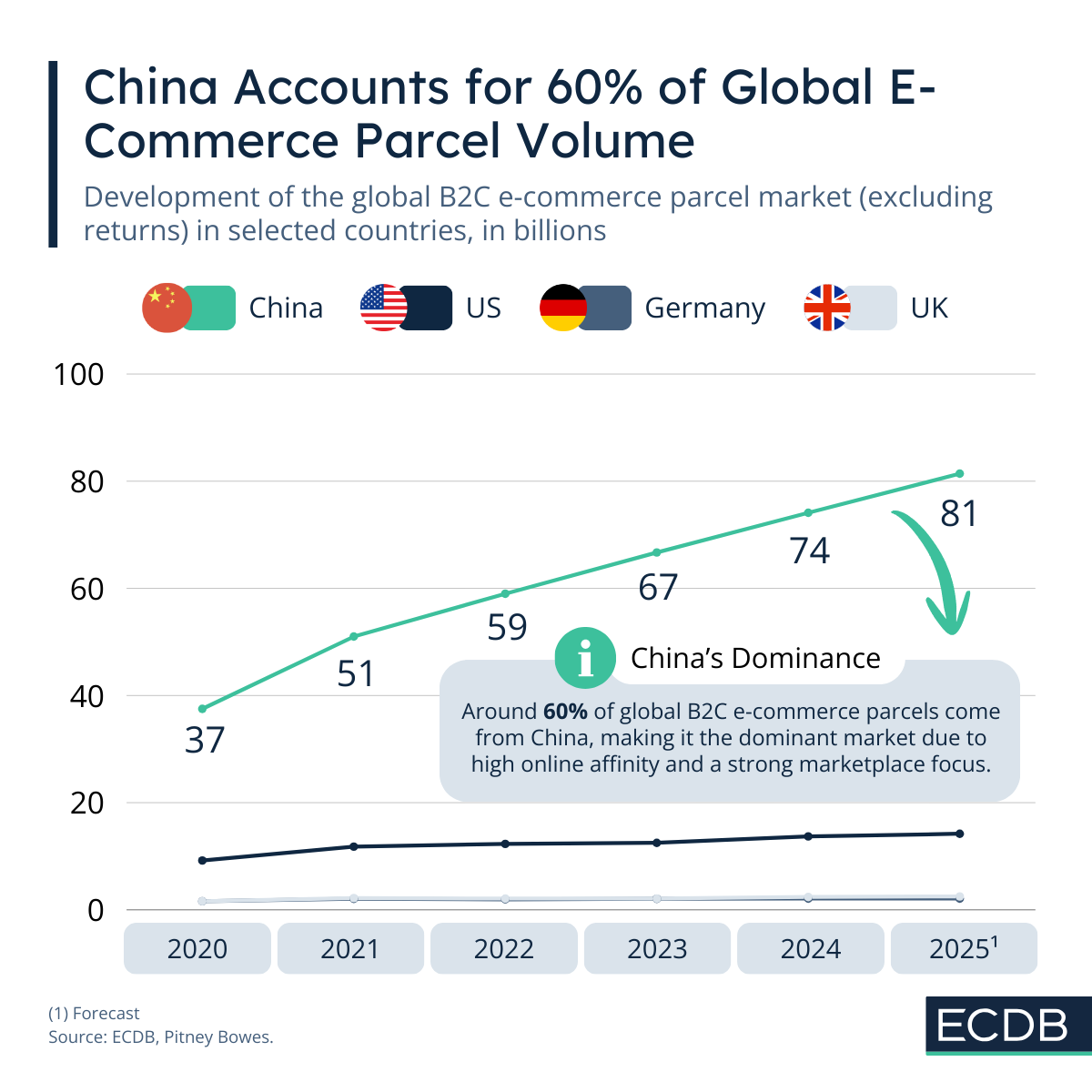
China Accounts for 60% of Global E-Commerce Parcel Volume
Global parcel volumes are highly concentrated. Around 60% of all global B2C e-commerce parcels originate from China, making it the largest contributor to worldwide parcel volumes. China’s parcel volumes have grown steadily since 2020 and far exceed those of other major markets shown. The data highlights China’s central role in shaping global e-commerce parcel flows.
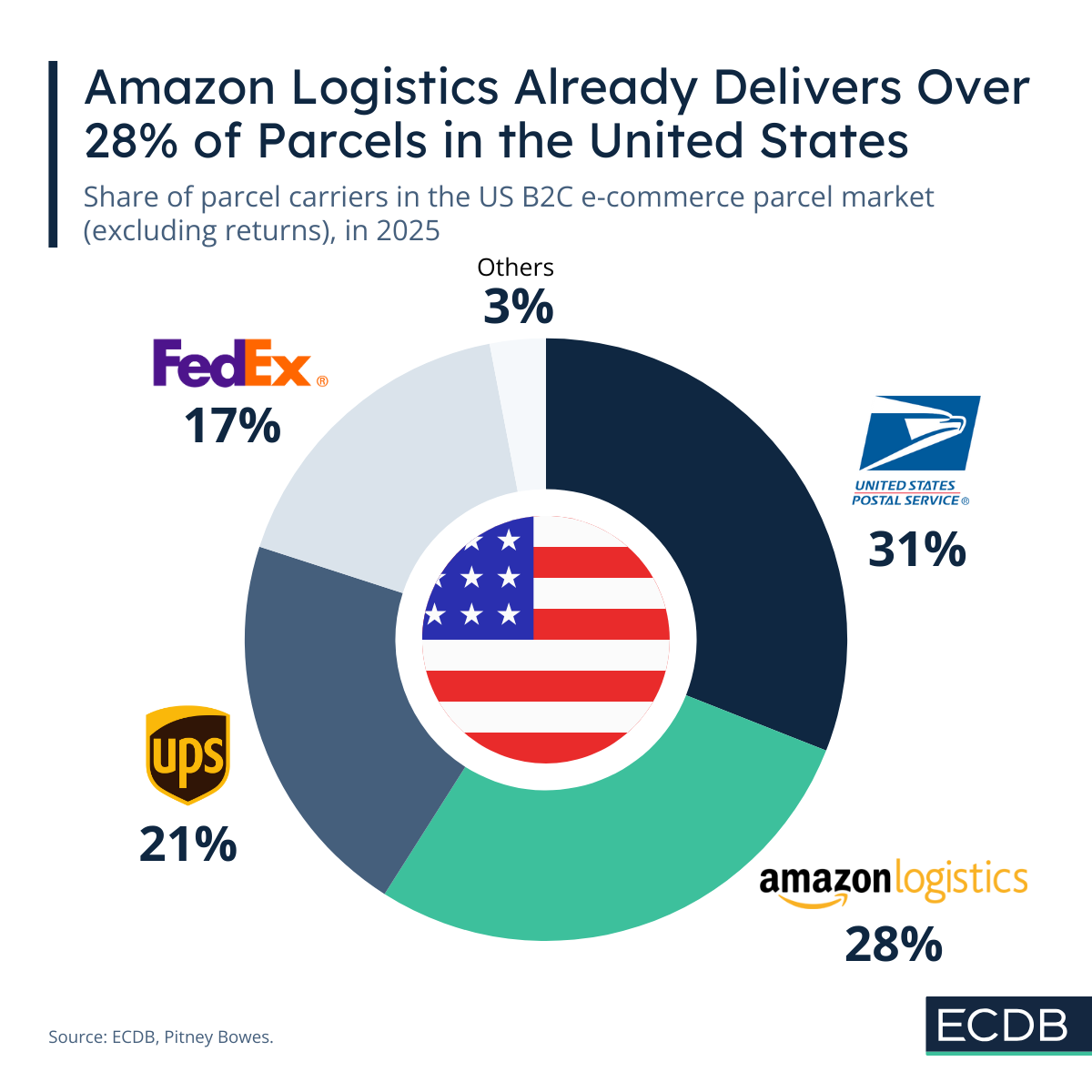
Amazon Logistics Already Delivers Over 28% of Parcels in the United States
In the US parcel delivery market, Amazon Logistics accounts for more than 28% of B2C e-commerce parcel deliveries in 2025. Other major parcel carriers also hold significant shares, resulting in a distribution where no single provider delivers a majority of parcels. The data illustrates the role of Amazon Logistics as one of the largest delivery players in the US e-commerce parcel market.
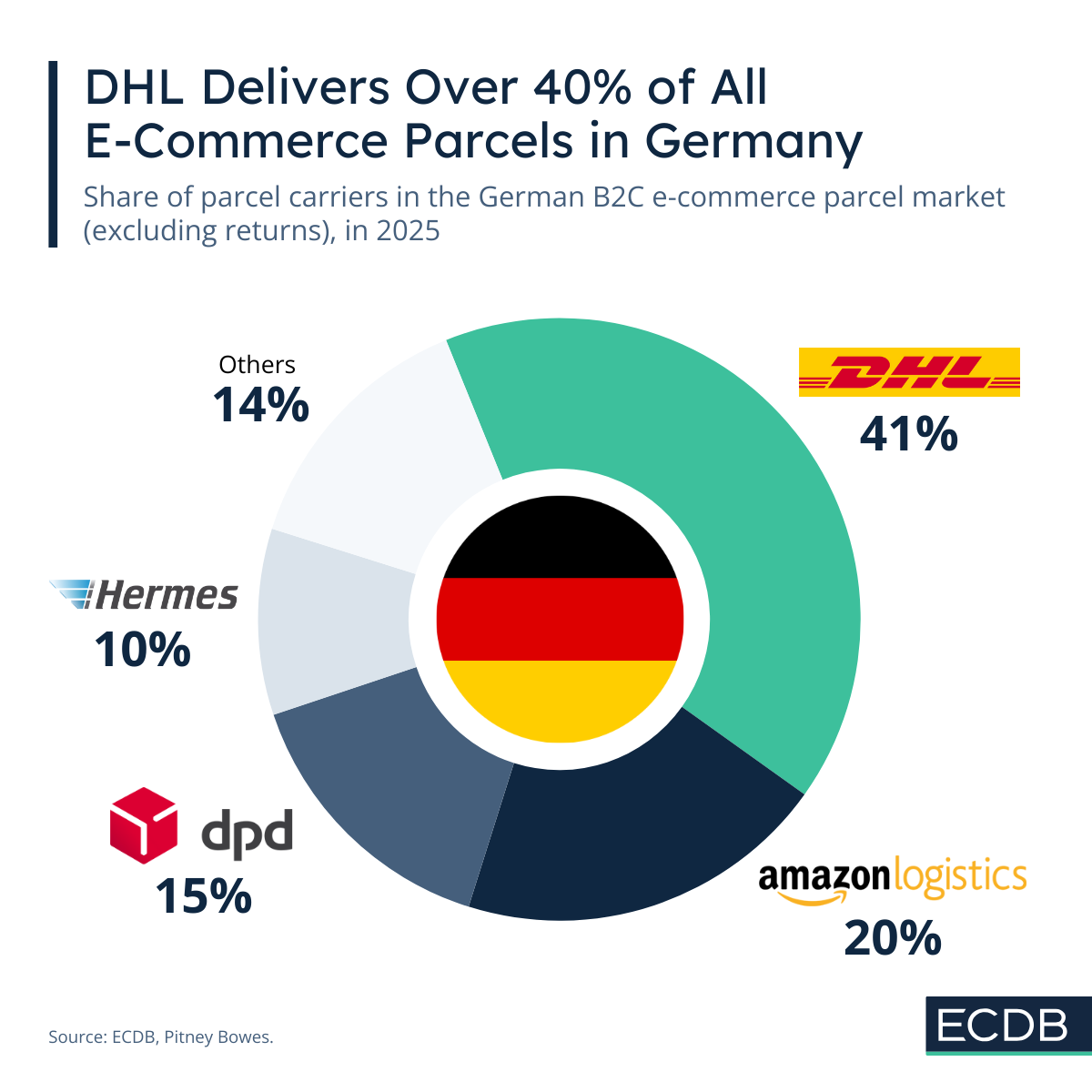
DHL Delivers Over 40% of All E-Commerce Parcels in Germany
Germany’s parcel delivery market shows a high level of concentration. DHL delivers over 40% of all B2C e-commerce parcels, clearly leading the market. Other carriers hold smaller shares, underlining DHL’s dominant position in Germany’s e-commerce parcel delivery landscape.
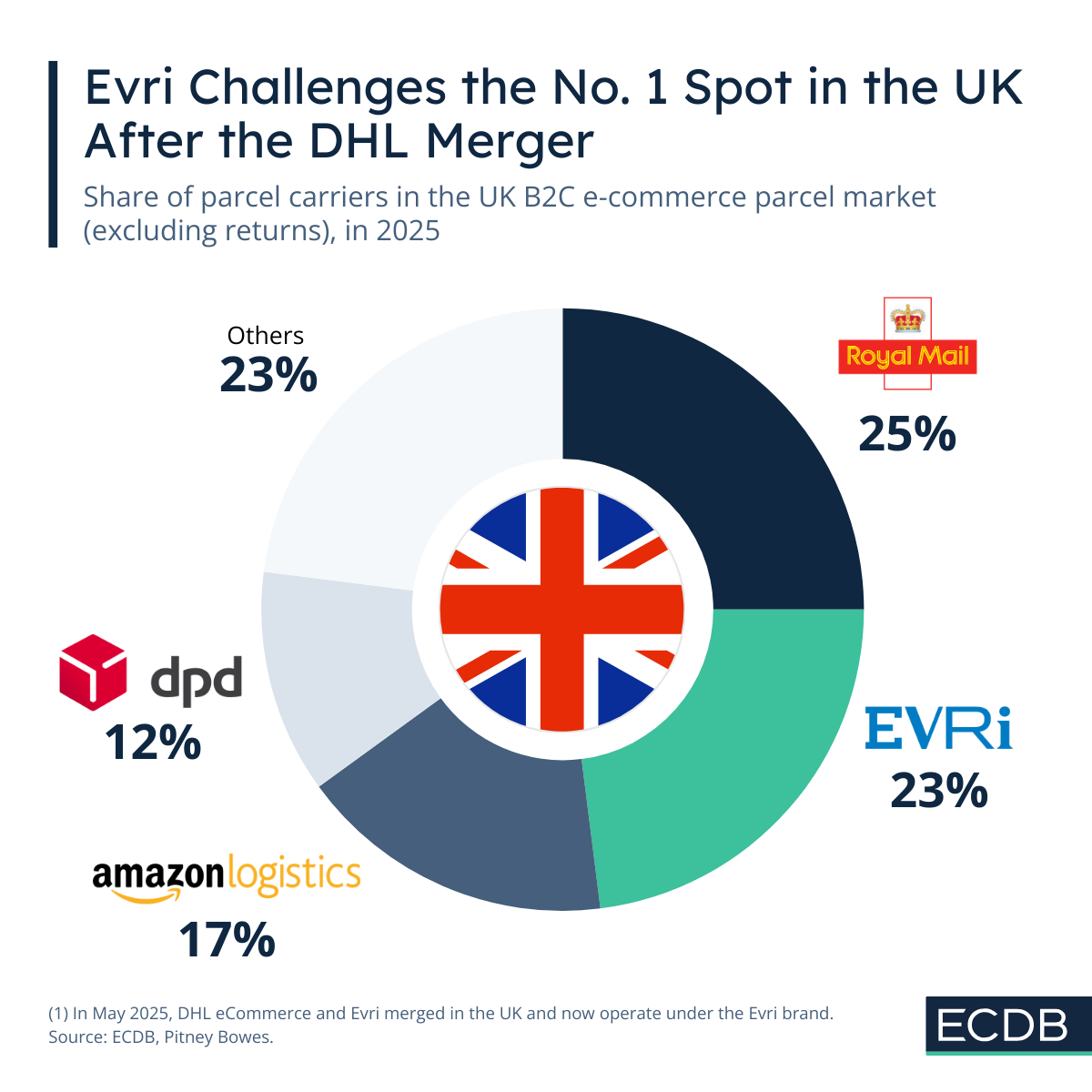
Evri Challenges the No. 1 Spot After the DHL Merger
In the UK, parcel delivery shares are more evenly distributed. Following the merger of DHL eCommerce and Evri in May 2025, Evri accounts for a significant share of B2C e-commerce parcel deliveries. Despite this consolidation, the market remains competitive, with several carriers holding comparable shares.
Conclusion
The global parcel market continues to grow at pace in 2025, reaching 121 billion B2C e-commerce parcels. At the same time, the data shows a clear imbalance in how these volumes are distributed. A large share of global parcels is generated in a small number of markets, and delivery volumes are concentrated among a limited group of carriers.
While overall growth remains strong, the structure of the parcel delivery market is defined by concentration rather than uniform expansion. Understanding where volume accumulates — and which carriers handle it - is key to interpreting developments in the global parcel delivery market.

Related Articles
All ArticlesReady to Unlock the Full Power of ECDB?
Book a demo to see how ECDB's market intelligence can support your business.