Agentic Commerce: Traffic Booster and Conversion Champion
AI is changing the game in e-commerce. Agentic commerce will be driving more traffic, converting more visitors, and giving sellers a smarter, cheaper way to reach customers.

Article in a Nutshell
AI-driven commerce is rising: Agentic commerce is transforming shopping and is expected to become the dominant channel for product discovery and purchase decisions.
Traffic shift on the horizon: AI-generated retail traffic currently lags behind traditional search, but projections show it surpassing organic search by 2028.
Higher conversions with AI: Since late 2025, AI-driven traffic has consistently outperformed traditional channels in converting visitors into customers, with the gap continuing to widen.
Seller-friendly economics: Platforms like ChatGPT charge significantly lower referral fees than major marketplaces, giving sellers a cost-effective way to reach customers while benefiting from higher conversion rates.
AI has changed the way we interact with the world around us. One of the ways in which this shift becomes palpable is in shopping. While it is still in its infancy, agentic commerce is expected to overhaul search traffic and conversion metrics to become the dominant channel for product discovery and drive purchase decisions.
AI Search to Surpass Traditional Search by 2028
Currently, annual visitor numbers to retail sites generated by large language models (LLMs) like ChatGPT, Gemini, and Claude remain far below those from traditional organic search. But this is going to change in the coming years. The question is not whether, but rather when the shift is going to become evident.
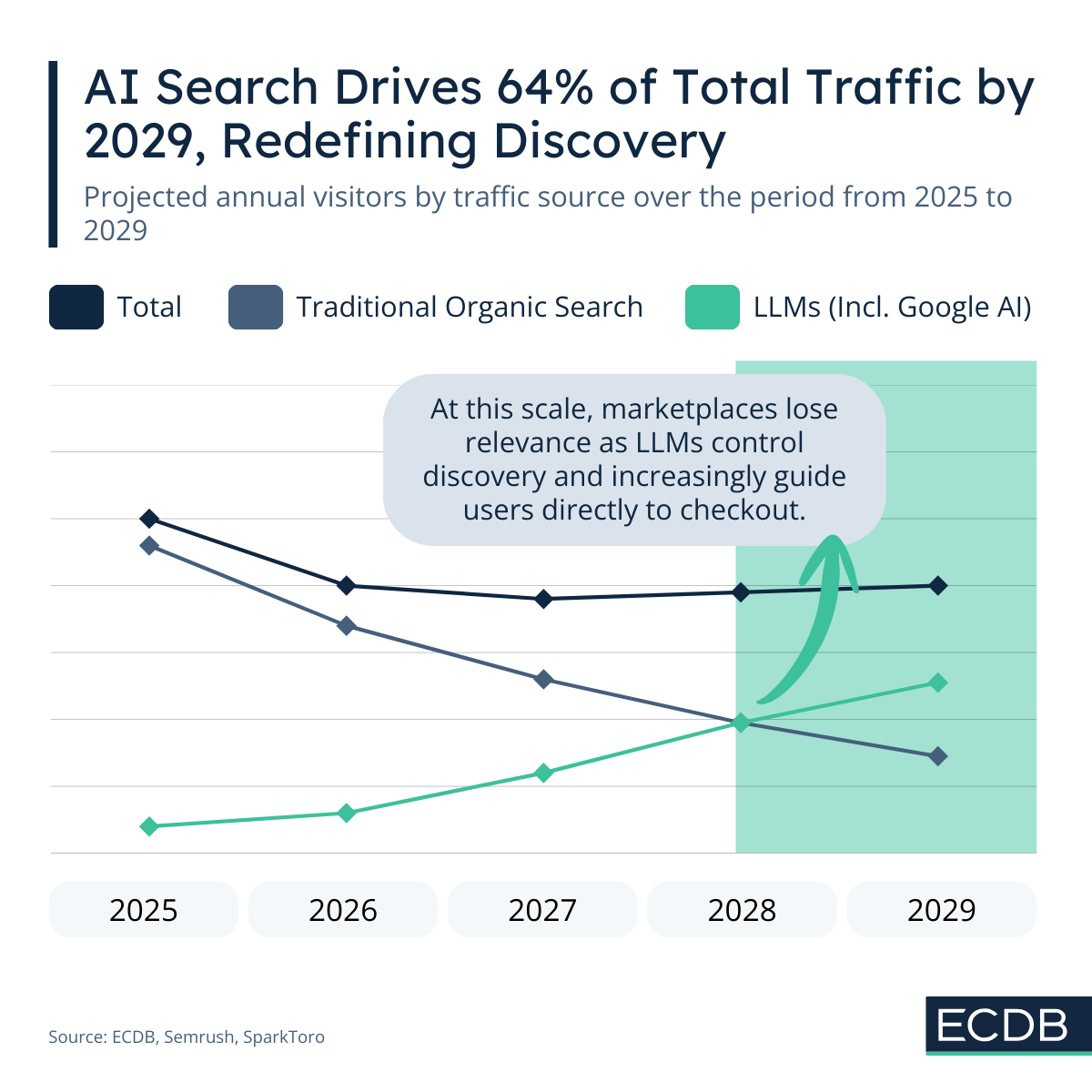
Projections by traffic analysts pinpoint 2028 as the year in which agentic commerce is going to surpass traditional organic search like Google and Bing to become the main driver of retail online traffic. By 2029, the share of total traffic is expected to reach 64%.
AI Outperforms Traditional Search When It Comes to Conversions
A noticeable shift in conversion rates is already favoring AI-powered traffic. Since September 2025, traffic driven by AI tools has consistently outperformed non-AI traffic in converting visitors into customers. The gap is not only persistent but also appears to be widening.
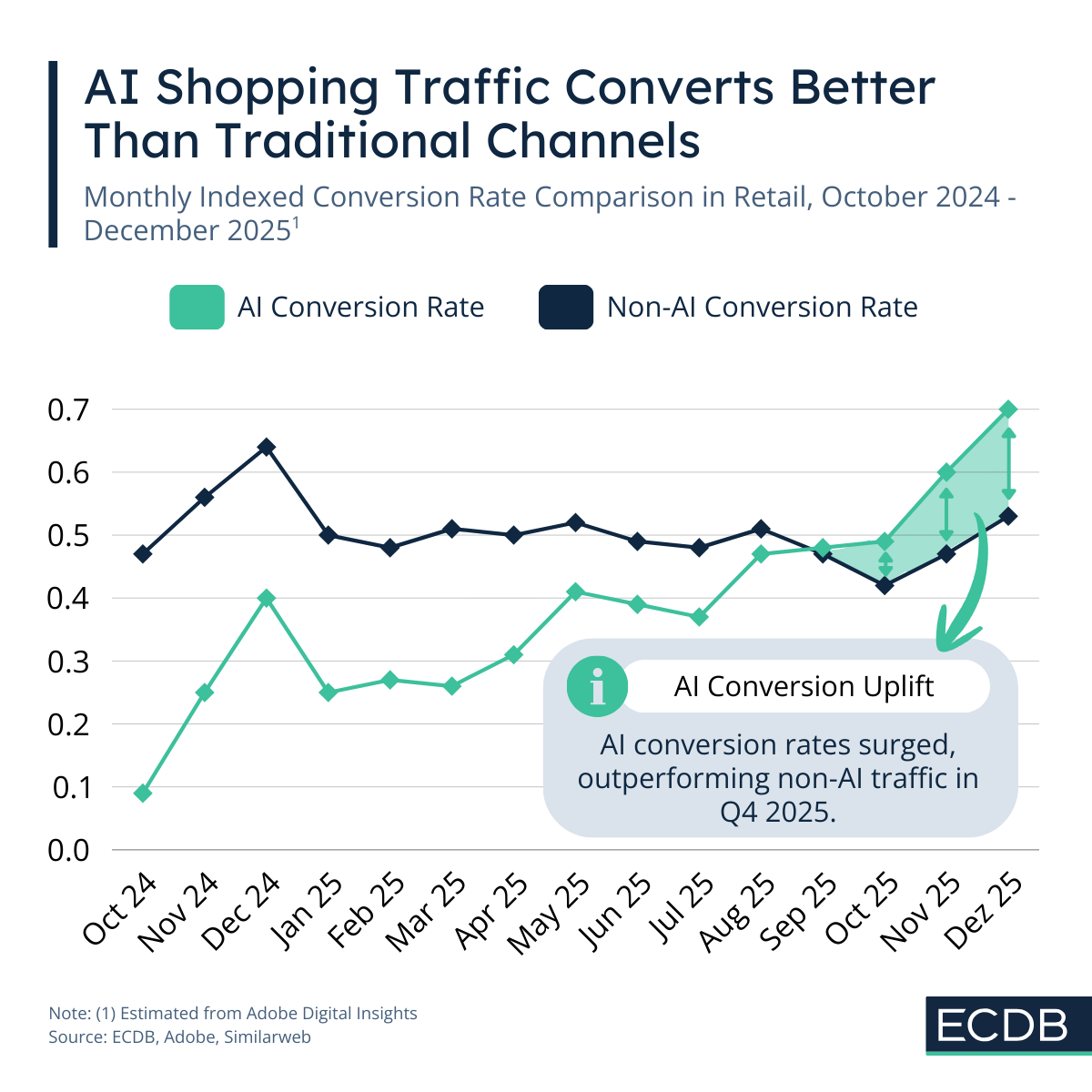
This development leads to the assumption that AI-driven engagement is becoming increasingly effective at turning interest into action. If current trends continue, AI may soon establish a clear advantage over traditional channels in driving sales.
ChatGPT Outpaces Traditional Traffic Sources
ChatGPT is already outperforming other traffic sources in driving engagement and conversions. Since 2025, traffic generated by ChatGPT has shown higher conversion rates than direct search, paid search, organic search, email, display advertising and social media.
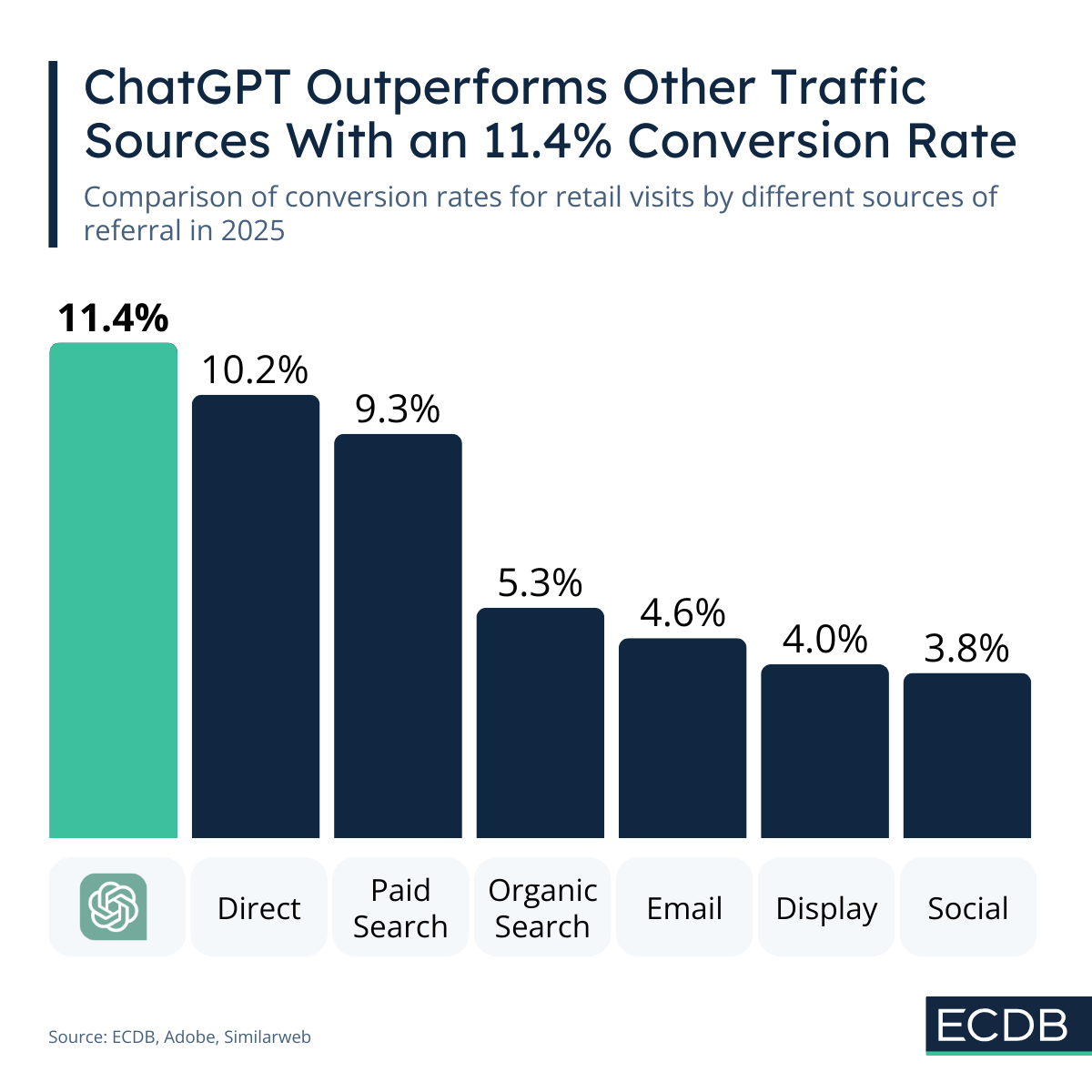
At a rate of 11.4%, it reflects how it reflects how AI-driven traffic is significantly more effective at converting visitors than traditional channels. This shift is expectedly going to become more prominent in the coming years.
LLM Referral Fees Are Lower, Benefiting Sellers
What's more, ChatGPT is an appealing platform for sellers, as its fees are significantly lower than those of major marketplaces. This cost advantage makes it easier for sellers to maintain margins, experiment with pricing, and reach customers without the heavy overhead associated with traditional e-commerce platforms.
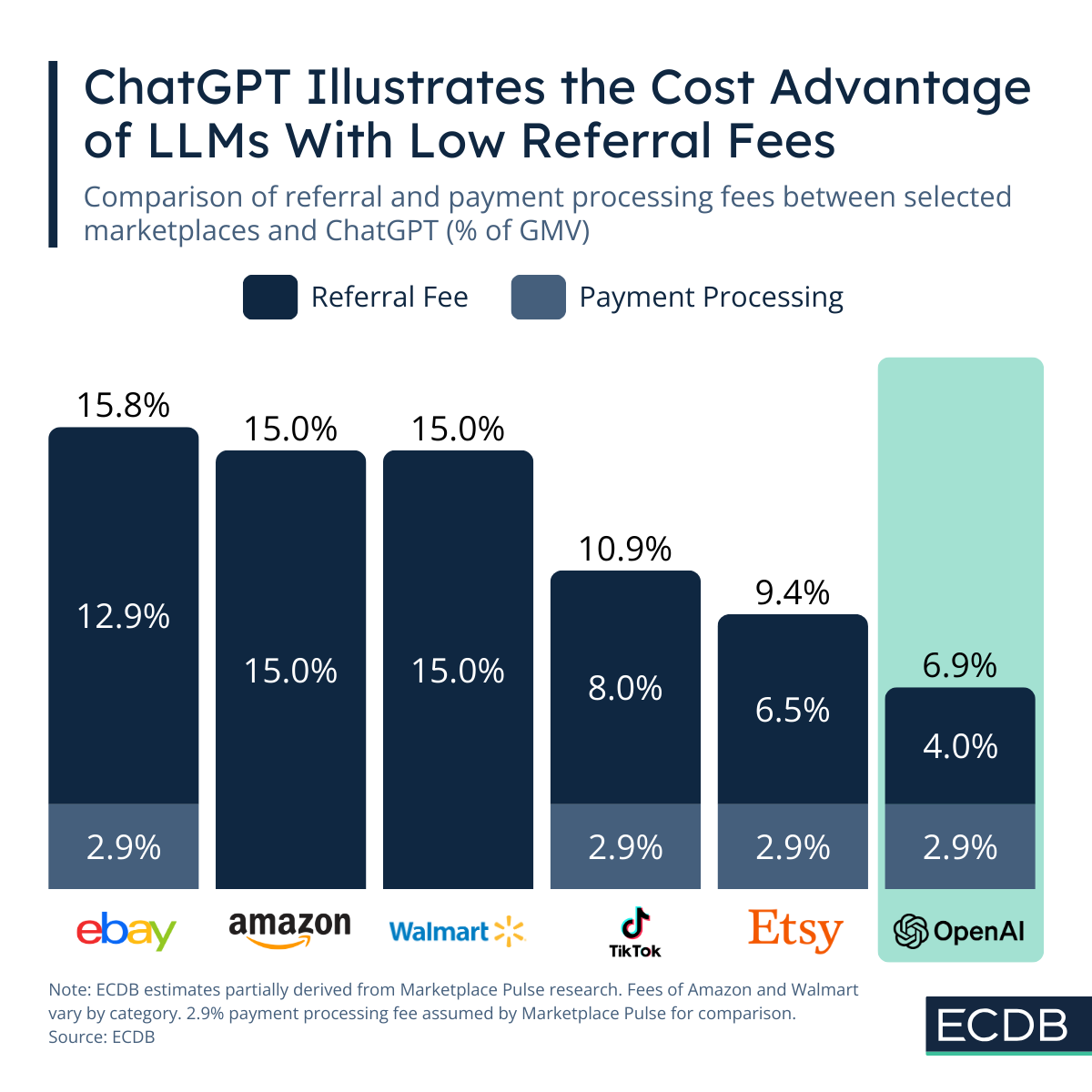
eBay, Amazon, and Walmart, the three leading marketplaces in US e-commerce, charge referral fees of 15.0% to 15.8%. By comparison, OpenAI’s rate is less than half of that, making it a significantly more cost-effective option for sellers.
Conclusion
The rise of AI in commerce is reshaping the rules of online shopping. Agentic commerce, powered by large language models like ChatGPT, is already outperforming traditional channels in conversions and engagement, and it is on track to surpass organic search as the primary driver of retail traffic by 2028.
For sellers, the combination of higher conversion rates and lower referral fees makes AI platforms an increasingly attractive channel to reach customers efficiently and cost-effectively. As these trends continue, AI is poised not just to complement traditional e-commerce, but to become the dominant force in product discovery and purchase decisions.
Related Articles
All ArticlesReady to Unlock the Full Power of ECDB?
Book a demo to see how ECDB's market intelligence can support your business.