How Amazon Uses Services to Outpace Competitors and Expand Globally
In 2026, Amazon is still the global leader of e-commerce. What drives its growth is not the product segment alone, however, it's services.

Article in a Nutshell
Shift to Services: In 2025, Amazon’s net service sales account for almost 60% of revenue.
Fastest-Growing Segment: Services include AWS, advertising, subscriptions, and third-party seller services, all of which grow fastest.
Retail Supports Strategy, Not Profit: Product sales alone are unprofitable due to fulfillment and operational costs; service revenues subsidize low prices, fast shipping, and market leadership.
Services Define the Future: Amazon’s long-term growth and dominance increasingly rely on its service ecosystem.
Amazon released its 2025 results last week, and while the headlines tend to focus on sales growth and margins, the more interesting story sits beneath the surface. In addition to continued growth of the company, a shift inside the profitability metrics is happening: Amazon is increasingly relying on services to sustain its market leadership.
Net Service Sales Account for Majority of Revenues
For years, Amazon has been associated with e-commerce dominance. But the numbers tell a different story about where the company’s weight is shifting.
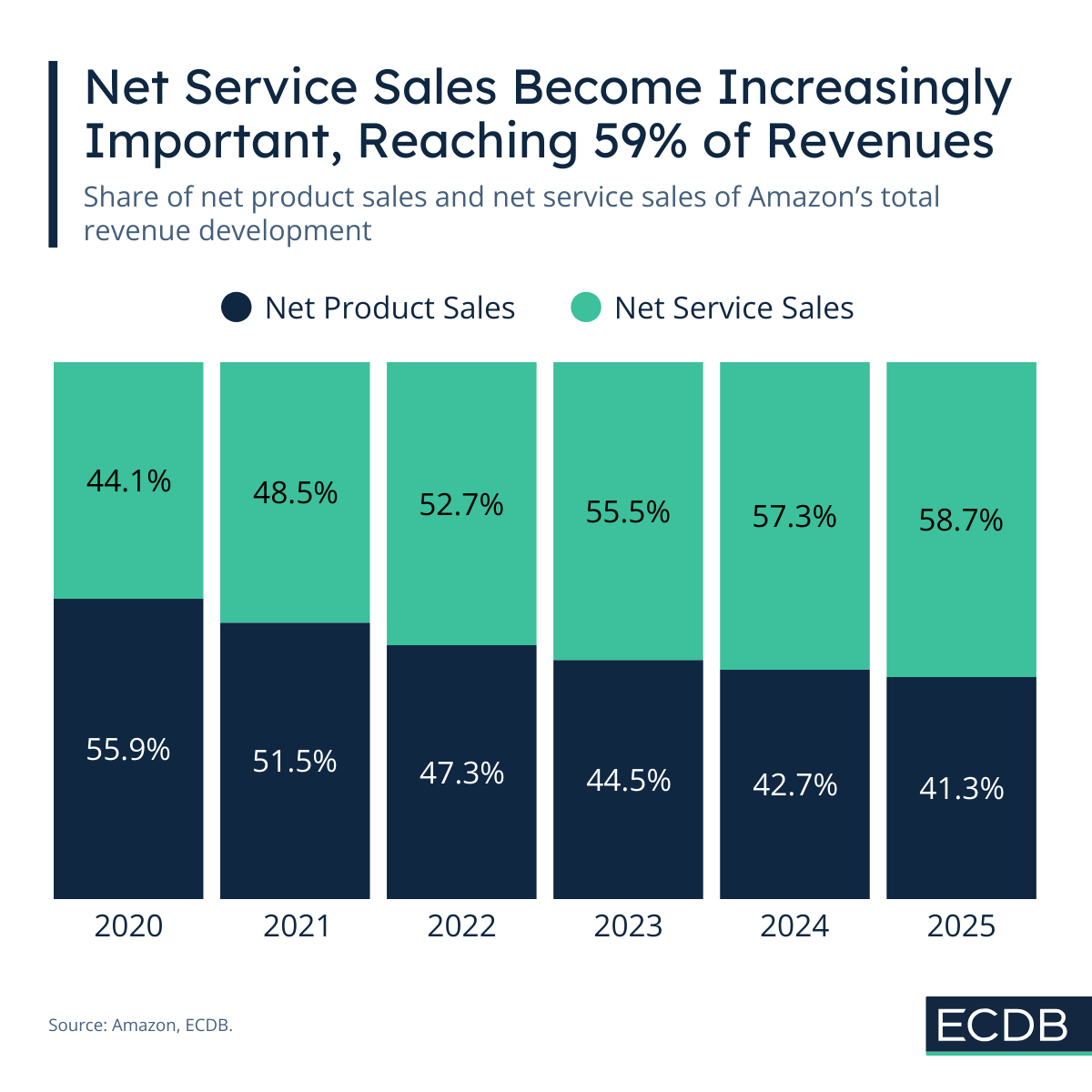
In 2020, product sales accounted for 56% of Amazon’s total revenue.
In 2025, that figure has dropped to around 41%.
Now, net service sales approach 60% of revenue shares.
Services now make up the majority of Amazon's revenue, and this development is expected to continue.
Services Grow Fastest Out of All Business Segments
Services include third-party seller services, AWS (Amazon Web Services), advertising, subscription services, healthcare and others. Net product sales include online stores and a small share of physical store sales.
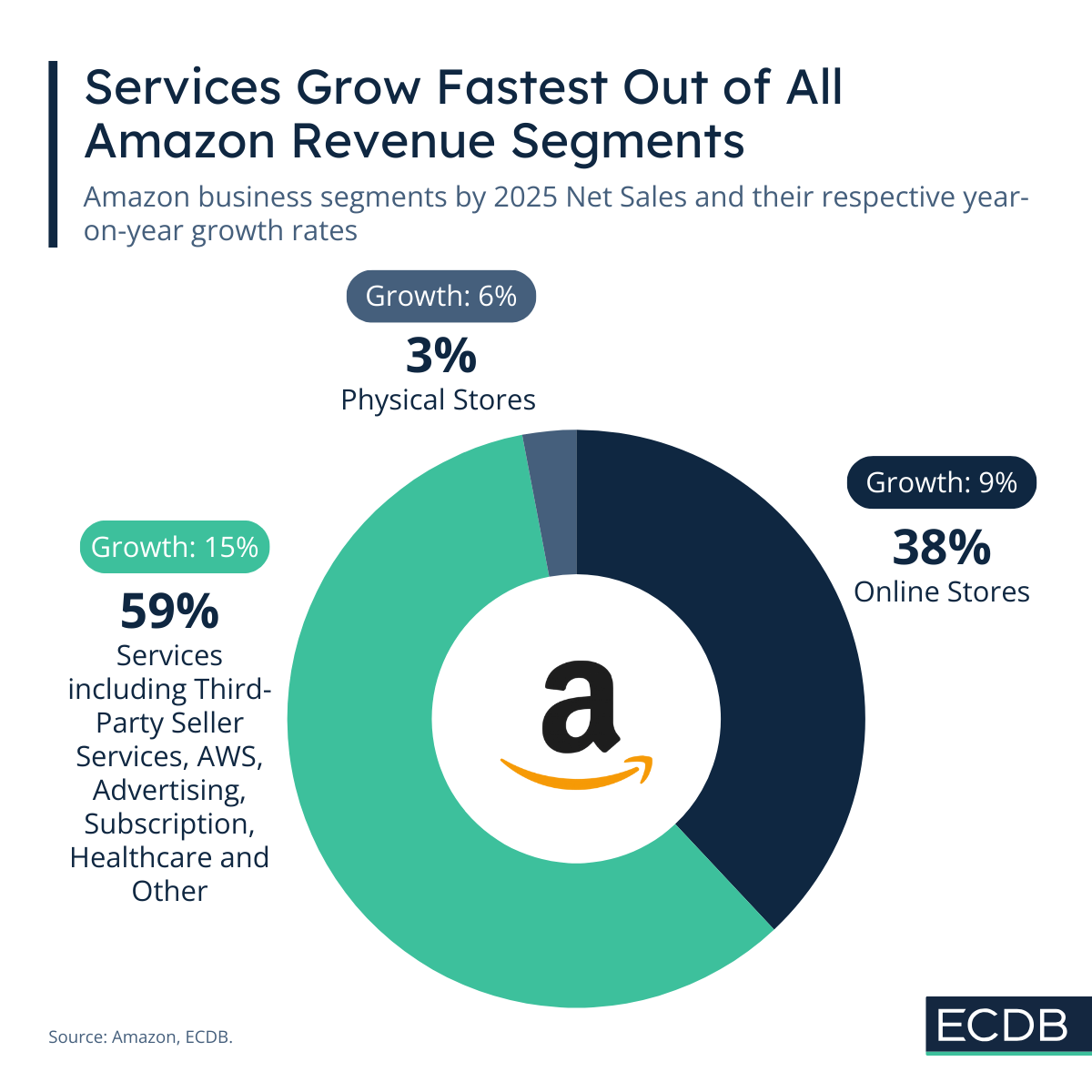
Together, services grow fastest in a year-on-year depiction, averaging a growth rate of 15%. Out of these segments, AWS is the fastest growing one at 20%. In comparison, physical stores grow slowest at 6%, while online stores perform a little better at a rate of 9%.
Retail Isn't the Profit Center: Enabling Competitiveness Through Net Service Sales
When you compare cost of sales and fulfillment to Amazon’s product revenue, a clear conclusion emerges:
The product segment, on its own, is not profitable.
Warehousing, shipping, returns, labor, and last-mile delivery eat away at margins. If Amazon were only selling products, it would be operating at a serious disadvantage.
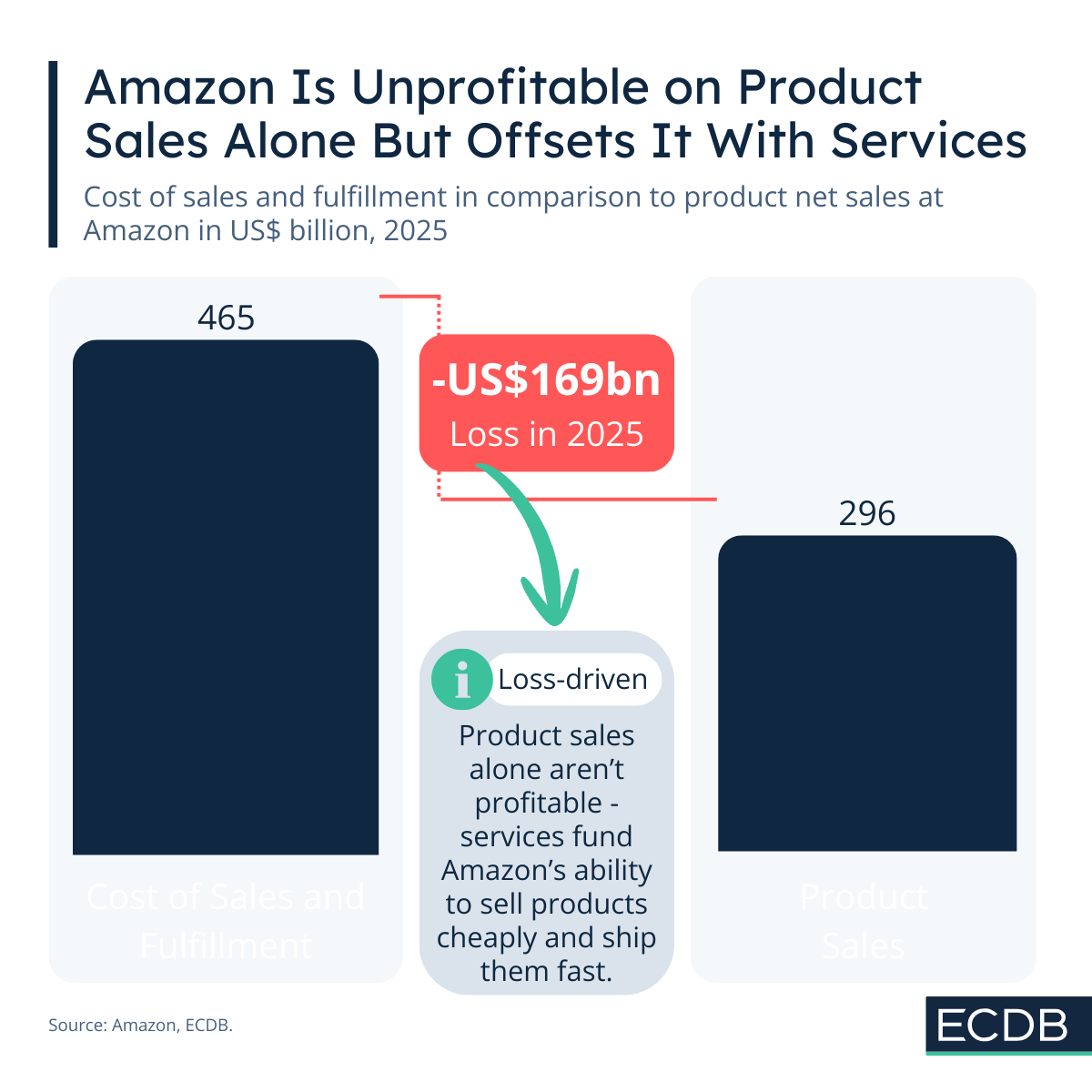
But Amazon isn’t only selling products. Service revenues allow Amazon to do something few competitors can:
Sell products at lower prices
Offer faster shipping
Absorb higher operational costs
Maintain market leadership
In other words, Amazon services subsidize its retail dominance.
Conclusion
Amazon’s 2025 results make one thing clear: the company’s long-term strength no longer lies in retail alone, but in the service ecosystem built around it. Because net service sales approach 60% of total revenues, the company is able to fund a net loss game elsewhere. It means that Amazon keeps prices low, ships fast, and affords higher day-to-day expenses.
The current growth rates show that this shift is far from over. Amazon service sales are going to expand further, particularly funded through ventures such as AWS with which Amazon cements its further presence in the digital infrastructure that underpins large parts of the global economy.

Related Articles
All ArticlesReady to Unlock the Full Power of ECDB?
Book a demo to see how ECDB's market intelligence can support your business.