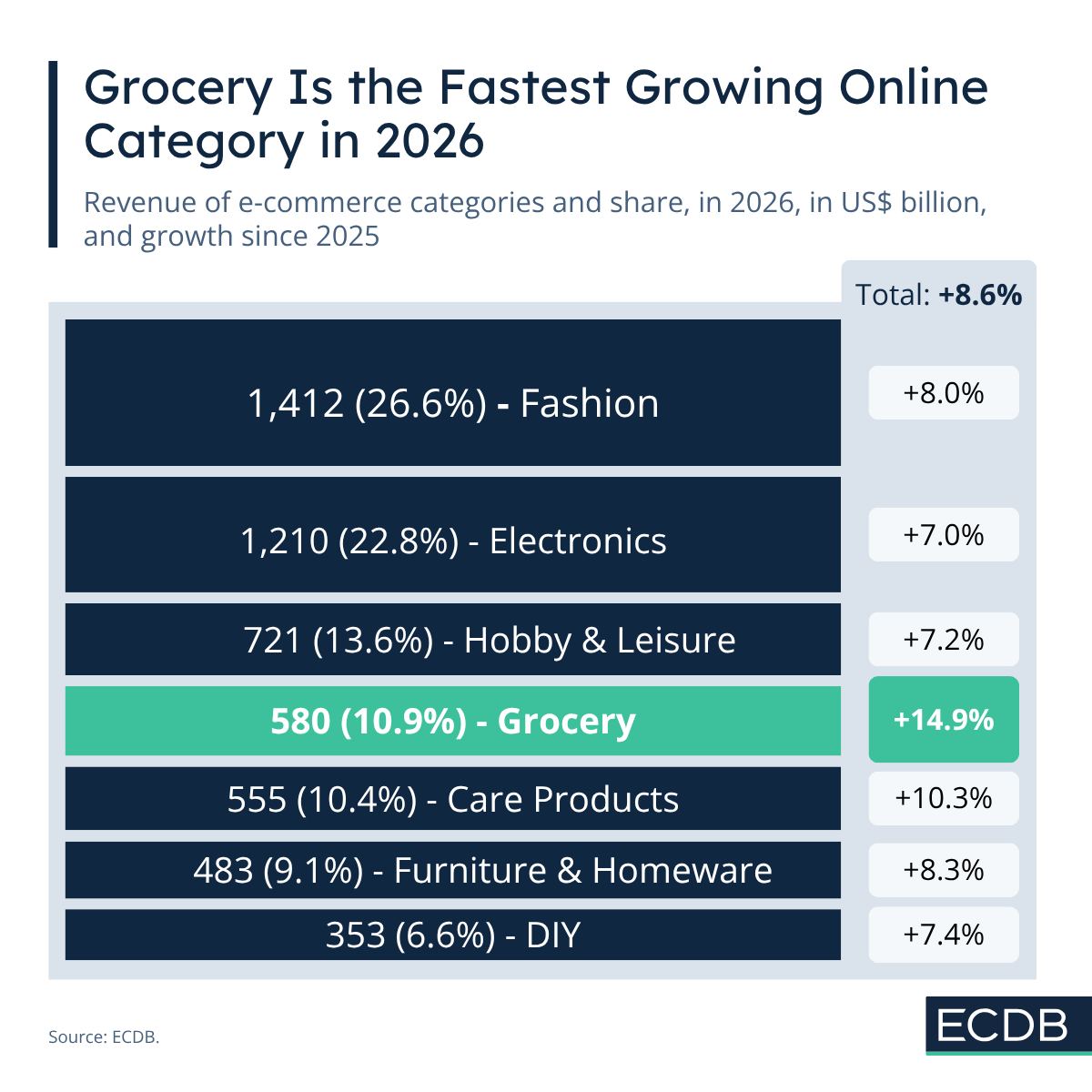
Grocery is emerging as the fastest growing force in e-commerce. It is a category that for a long time remained under-digitized compared to other major retail segments. Unlike fashion or electronics, grocery started from a very low base of online penetration, which has created significant room for accelerated growth.
Structural Factors Driving Grocery Growth
Today, that gap is closing rapidly. While established categories still dominate in absolute size, grocery is now catching up in terms of momentum. Fashion accounts for 26.6% of global e-commerce share and electronics for 22.8%, but grocery is expanding at a year-on-year growth rate of 14.9% in 2026.
Several structural factors drive this shift:
Fulfillment infrastructure has reached a level of maturity that makes grocery viable at scale online. Advances in warehousing, cold chain logistics, and last mile delivery have significantly reduced the operational friction that once made grocery one of the most difficult categories to digitize. What was previously constrained by speed, freshness, and complexity is now increasingly supported by systems designed for efficiency and scale.
Shifting consumer preferences since the pandemic favor online grocery. What began as a forced shift toward online grocery purchasing has gradually become a habitual and convenient option for a growing share of households.
Competition has intensified across both traditional retailers and digitally native players. This has increased promotional activity, expanded delivery coverage, and contributed to higher order volumes across platforms.
Macroeconomic developments fuel consumer price-consciousness. Inflationary pressure combined with broader assortment digitization has made consumers more price conscious and more willing to compare options online.
Outlook: Not Just Grocery as a Category to Watch
One additional category worth watching is care products, which includes personal care, household care, and health care. Similar to grocery, it benefits from high purchase frequency, substitution potential, and increasing digitally native discovery. These characteristics make it well suited for continued online growth.
The next wave of e-commerce is being driven by everyday essentials rather than discretionary goods. Categories that were once considered too complex, too low margin, or too operationally heavy to digitize are now becoming central to online retail development.