Article in a Nutshell
E-commerce growth in Germany is primarily driven by younger, urban consumers, while rural and older groups act as a stabilizing force or drag on acceleration.
Spending intentions are split, with 28% planning to spend more online and 20% planning to spend less, despite overall market stability.
Structural access and convenience (logistics, delivery speed, product variety) strongly support higher online spending in cities, while rural areas face adoption barriers.
Economic pressures affect all groups, but behavioral differences are driven by prioritization: younger users emphasize convenience and necessity, while older and rural consumers focus more on financial caution and maintaining current spending levels.
E-Commerce is growing, but who is behind it? A recent survey of German consumers has broader implications. It shows that online shopping is increasingly shaped by younger, urban buyers.
At the same time, the groups anchoring, or even slowing, that growth are rural consumers and those over 45. They are the ones most likely to express concerns related to the economic situation and personal financial prioritization.
Urban Consumers Tend to Spend More Than Rural Shoppers
The overall picture looks stable. Most consumers say they don’t plan major changes to their shopping habits in the next 12 months. But the edges are where things get interesting.
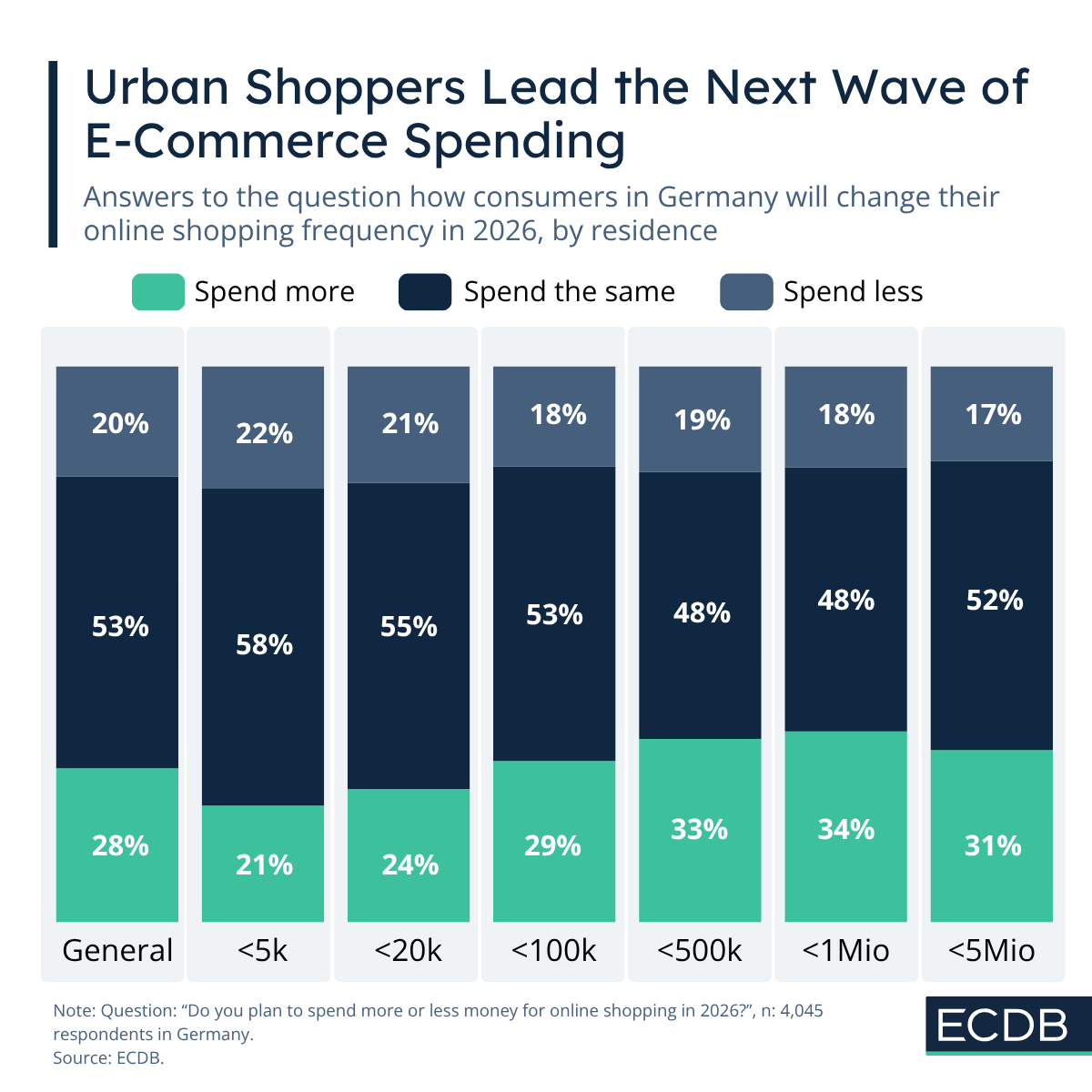
Rural consumers are more likely to say they plan to cut back, while urban shoppers tend to push online spending upward.
The reasons for that trend are structural. Cities offer more expansive logistics, faster delivery, and a wider range of services that make e-commerce more seamless and accessible. Rural areas often lack that same level of convenience, which naturally dampens adoption and spending.
Younger Users Prioritize Online Shopping, Older Shoppers Plan to Maintain Status Quo
In line with city dwellers, younger consumers are leading the charge. Their lifestyles naturally align with what e-commerce offers: speed, convenience, and access to a broader range of products.
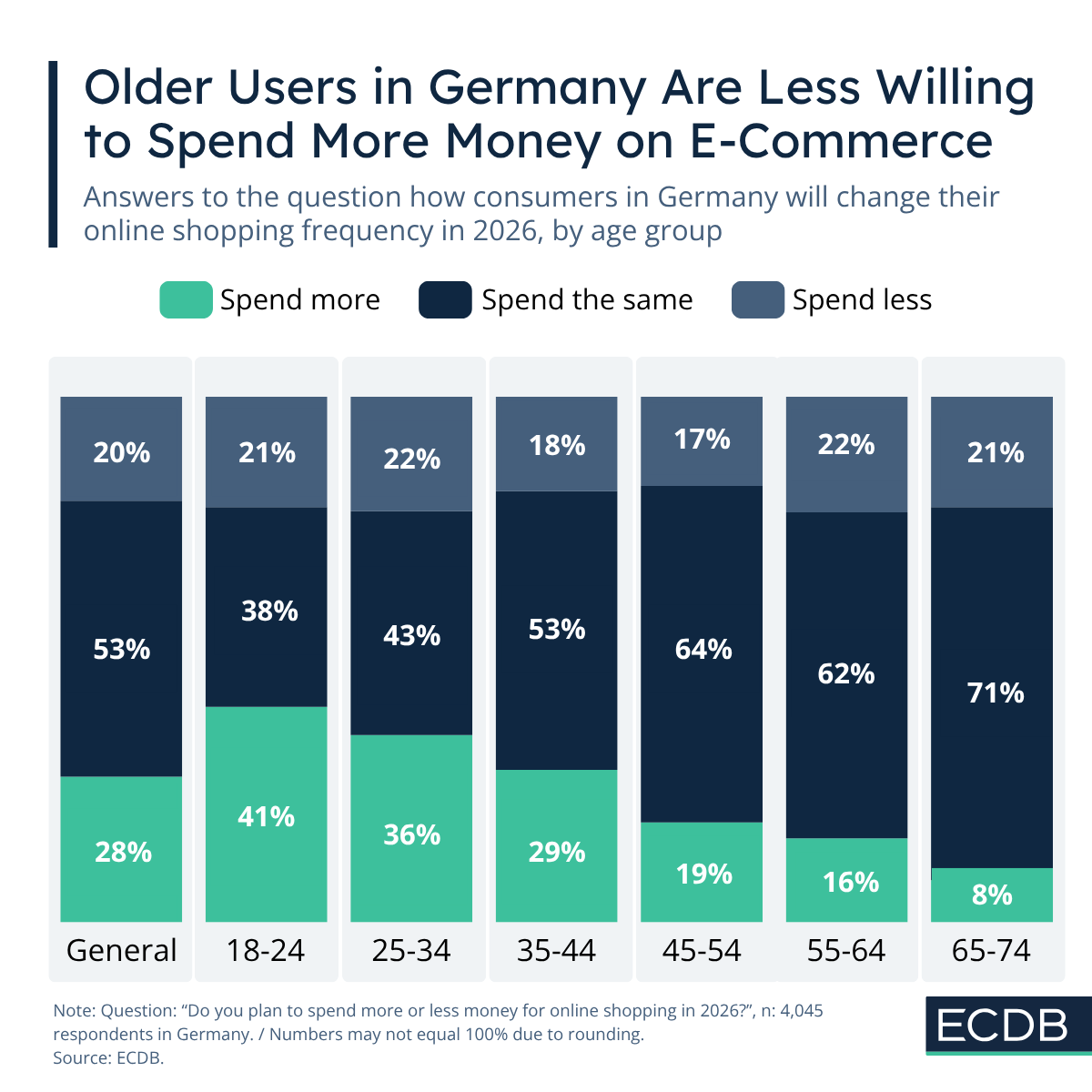
41% of 18-25 year-olds say they plan on spending more on e-commerce
Only 8% of 65-74 year-olds plan on spending more
The ratio of consumers saying they will cut back is largely equal
The hesitation to increase e-commerce spending is clearly concentrated among older consumers. However, instead of reducing their spend, most online shoppers over 45 intend to hold steady at current levels.
Structural and Behavioral Aspects to Spending Less
Finding out why shoppers plan on spending less money on e-commerce reveals several structural and personal reasons:
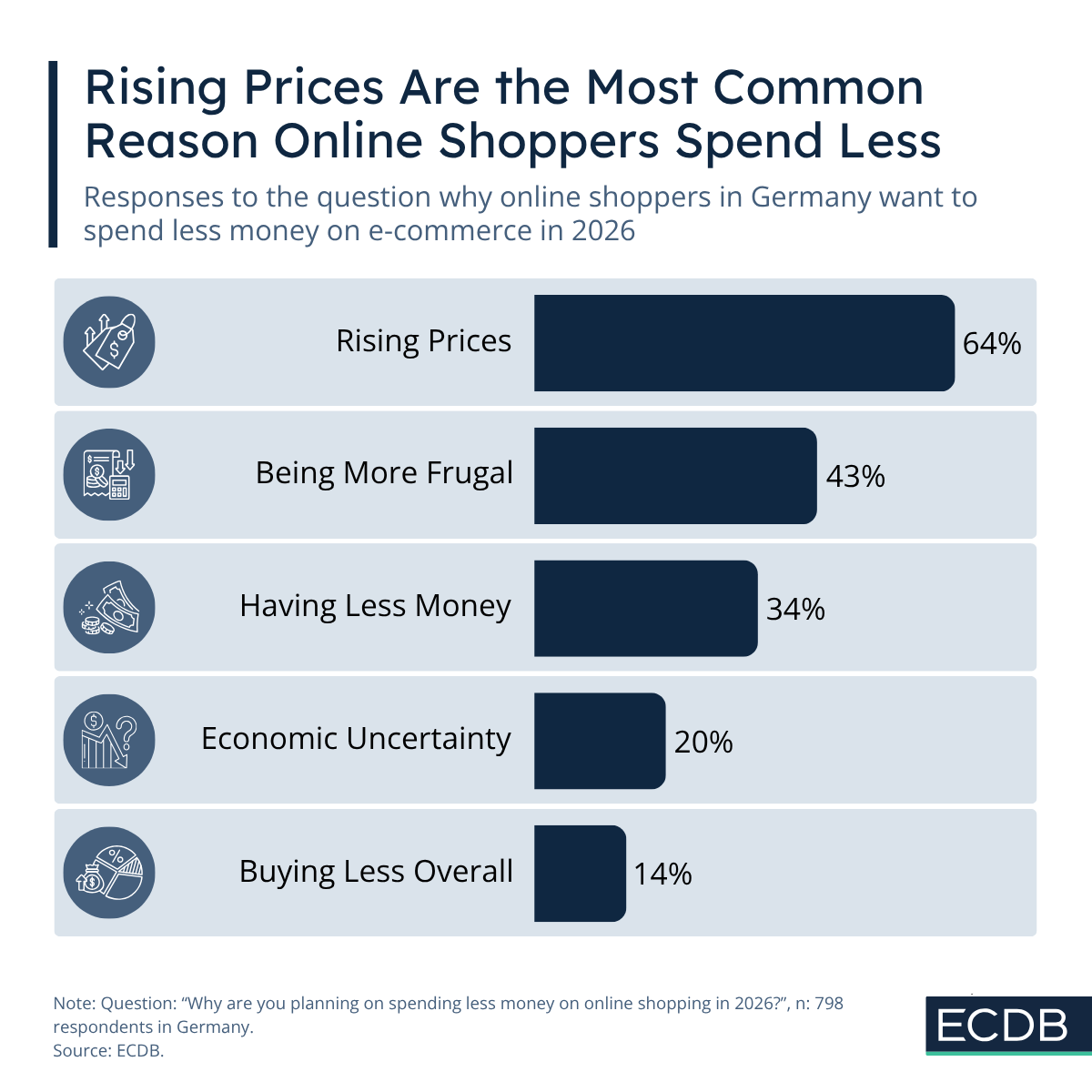
Rising prices is the most common answer, at 64%
Planning on being more frugal in general comes second, with 43%
Having less money at hand is the third-most frequent reason, at 34%
Economic uncertainty and buying less overall scored at 20% or below.
It would be a mistake to assume that younger, urban consumers are unaffected by the same financial pressures. Rather, it is the prioritization of spending that shapes their behavior differently. Younger and urban consumers tend to place greater value on what e-commerce delivers: efficiency, variety, and immediacy. In many cases, online shopping replaces time-consuming alternatives, making it feel less like a luxury and more like a necessity.
E-Commerce as a Story of Prioritization
The overall market is largely stable, but at the fringes consumer behavior diverges along demographic and geographic lines. Younger shoppers and urban dwellers on the one side reinforce the upward trajectory of e-commerce. Their drivers are convenience and prioritization of fast delivery and broad product selection over more accessible and traditional retail habits.
On the other side, rural inhabitants and older users over 45 years hold back due to financial restraint, or simply different expectations of how and where they shop. Economic pressures are present across all groups, but their impact is filtered through lifestyle, access, and perceived necessity. For some, online shopping is an efficiency tool that replaces friction in daily life. For others, it remains an optional channel that is more easily adjusted when budgets tighten.