December 2025 E-Commerce Wrap-Up: Global Revenue Hits US$499.6 Bn, China Leads in Growth
December e-commerce slows slightly from November's record highs, but global sales still topped $499 billion. See which countries, categories, and platforms led the way.

Nadine Koutsou-Wehling
Data Journalist
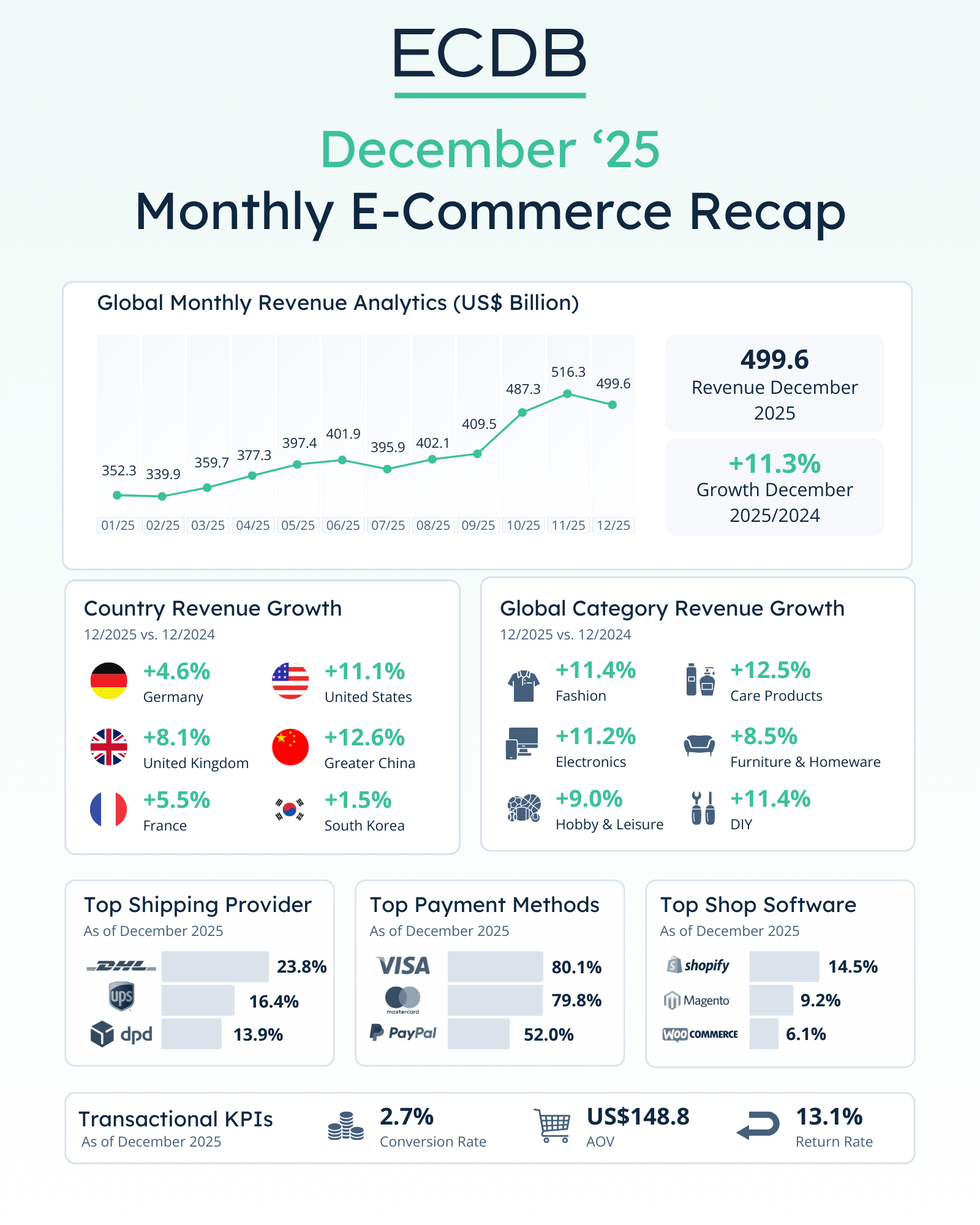
The new year 2026 has begun. On this occasion, we examine the e-commerce recap for December. In the last month of 2025, US$499.6 billion was generated in world e-commerce.
With a year-on-year growth rate of 11.3%, revenues decreased since November, the strongest month of 2025. Although holiday shopping continued into December, it was not as high as the previous month.
Once again, China was the strongest country in the depiction, with a year-on-year growth of 12.6%. The United States followed with 11.1%. South Korea was the slowest again, with a growth rate of 1.5%, lagging behind the other key markets.
Top categories in this month were Care Products (with 12.5% growth since December 2024), Fashion (11.4%) and DIY (11.4%), as well as Electronics (11.2%).
Dominant shipping providers, payment providers and shop software are also included.

Related Articles
All ArticlesReady to Unlock the Full Power of ECDB?
Book a demo to see how ECDB's market intelligence can support your business.