The Real Impact of Return Fees on Online Shopping Behavior
Free returns feel like a basic expectation in e-commerce, but new data shows they are far more than a convenience feature. How would the introduction of return fees shape consumer behavior?

Article in a Nutshell
Returns are an expected part of the shopping experience in categories like fashion, where customers often order multiple variations to find the right fit.
In Germany, 76% of shoppers value free returns, while only 45% are willing to pay, with clear differences across income and age groups.
If return fees are introduced, 66% would change behavior, including 46% buying less and 20% switching retailers.
Return friction is a cost factor and a key variable in shaping how consumers shop online.
Returns are a double-edged sword in e-commerce. They are costly and operationally complex for retailers, but in certain product categories such as fashion they are an expected part of the customer experience. Shoppers often order multiple sizes or variations with the intention of keeping what fits and sending back what does not work.
In Germany, consumer research highlights how strongly return policies influence purchasing decisions, and for many shoppers free returns are a decisive factor. The data shows a clear link between return expectations and buying behavior.
Over Three Quarters of Shoppers Find Free Returns Important
Returns are closely tied to conversion and customer satisfaction. Many online shoppers deliberately order multiple variations of a product to try at home before deciding. While this improves the customer experience, it creates significant cost pressure for retailers, including logistics, handling, restocking, quality checks, and in some cases write-offs.
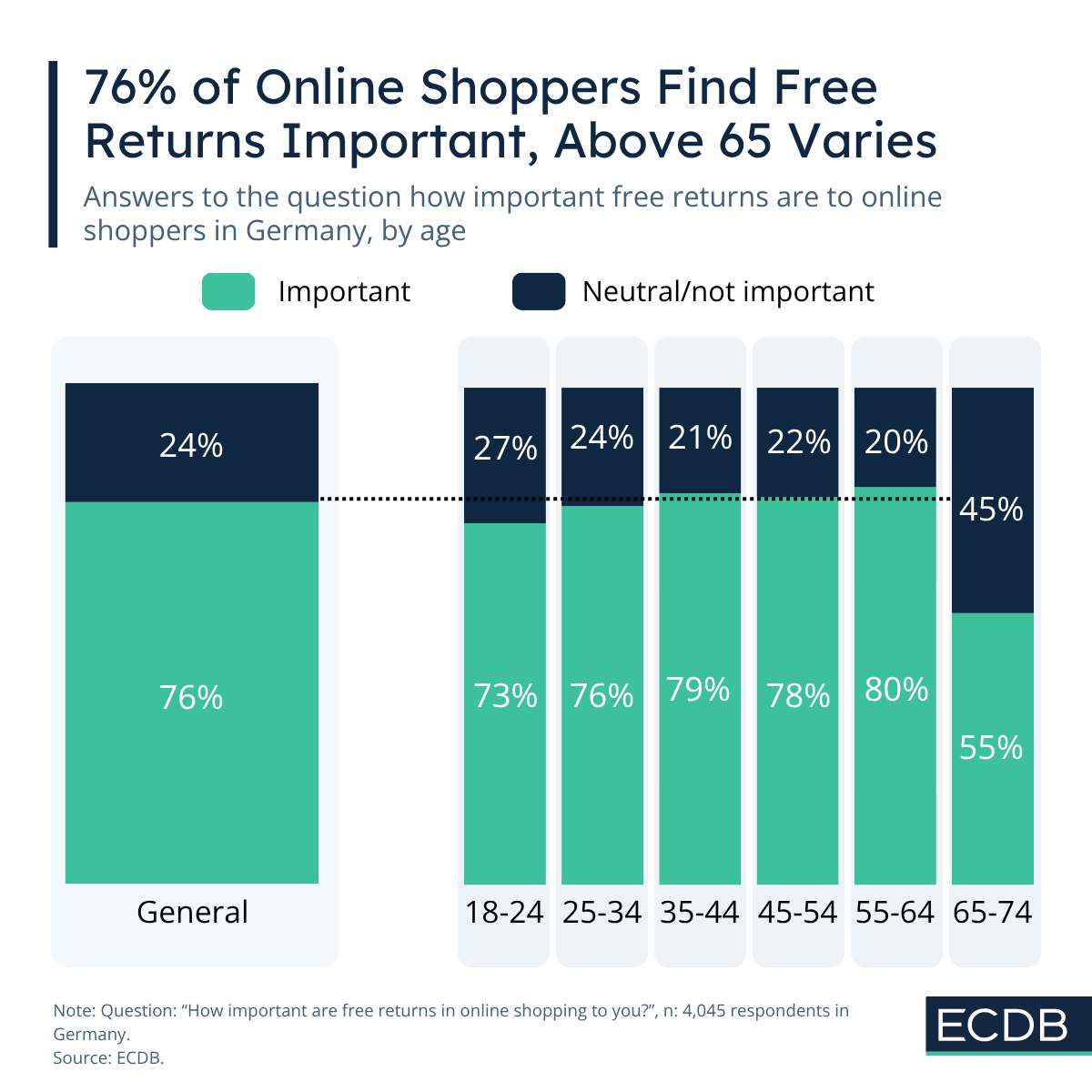
As a result, 76% of consumers in Germany say that free returns are important when shopping online. Only 24% consider them unimportant or remain neutral.
The tendency to value free returns as important rises with age, although the overall level remains high across all groups
Only exception is the oldest cohort, where 55% consider free returns important
At the same time, willingness to pay for returns is significantly lower.
Return Attitudes Correlate With Income
Only 45% of consumers say they would be willing to pay for returns, and this willingness is closely linked to income levels. Higher earners are generally more open to return fees, while lower-income groups tend to resist them more strongly.
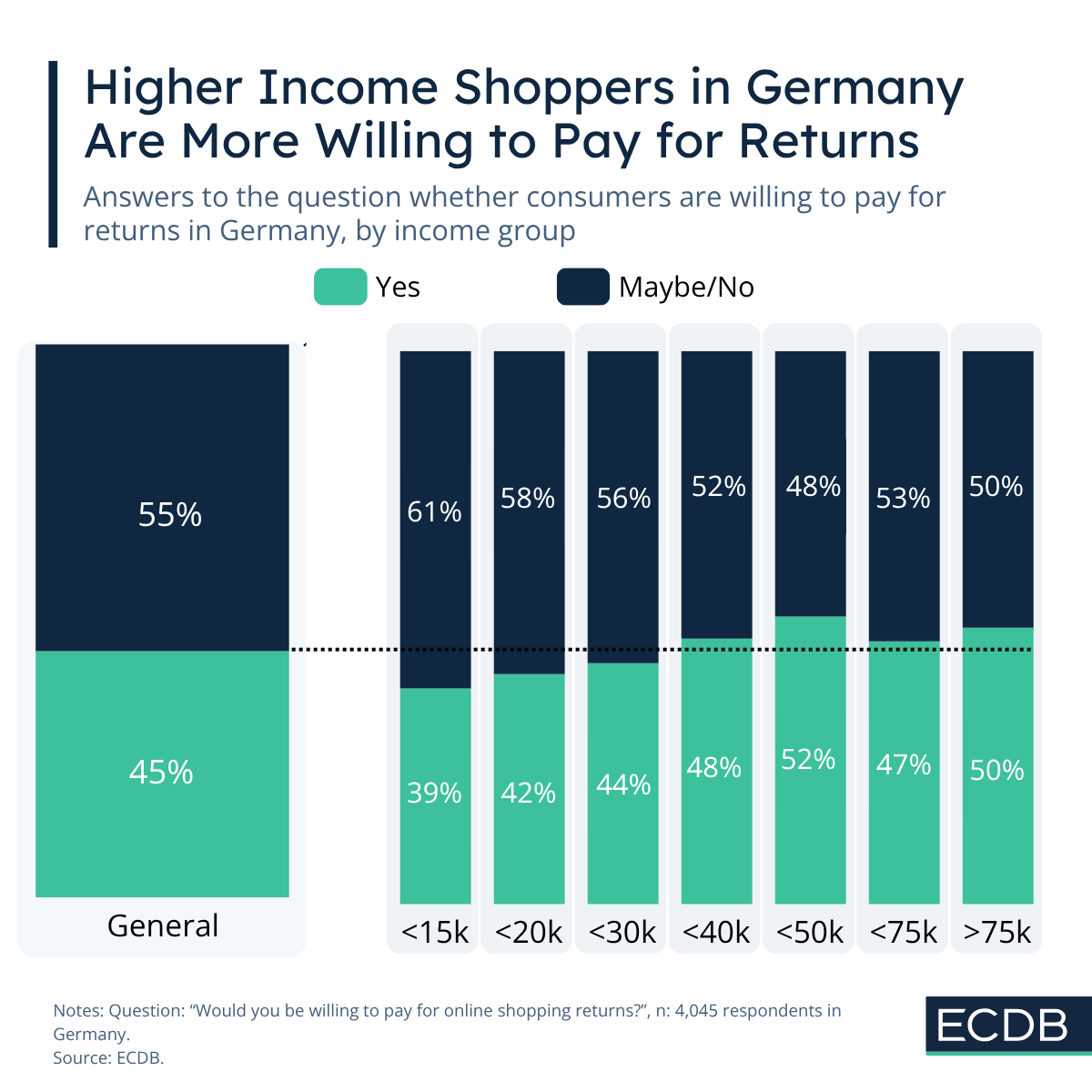
The relationship is not perfectly linear. At the highest income levels, willingness to pay for returns slightly declines again, which suggests that expectations around service quality and convenience remain strong even among affluent consumers.
This already suggests a clear friction point: Return policies are not neutral, but they actively shape how consumers approach online shopping.
How Return Fees Change Behavior: 46% Would Buy Less
If return fees were introduced, 66% of online shoppers say they would change their behavior. Among them, 46% would reduce their purchasing activity, while 20% would switch to retailers that continue offering free returns.
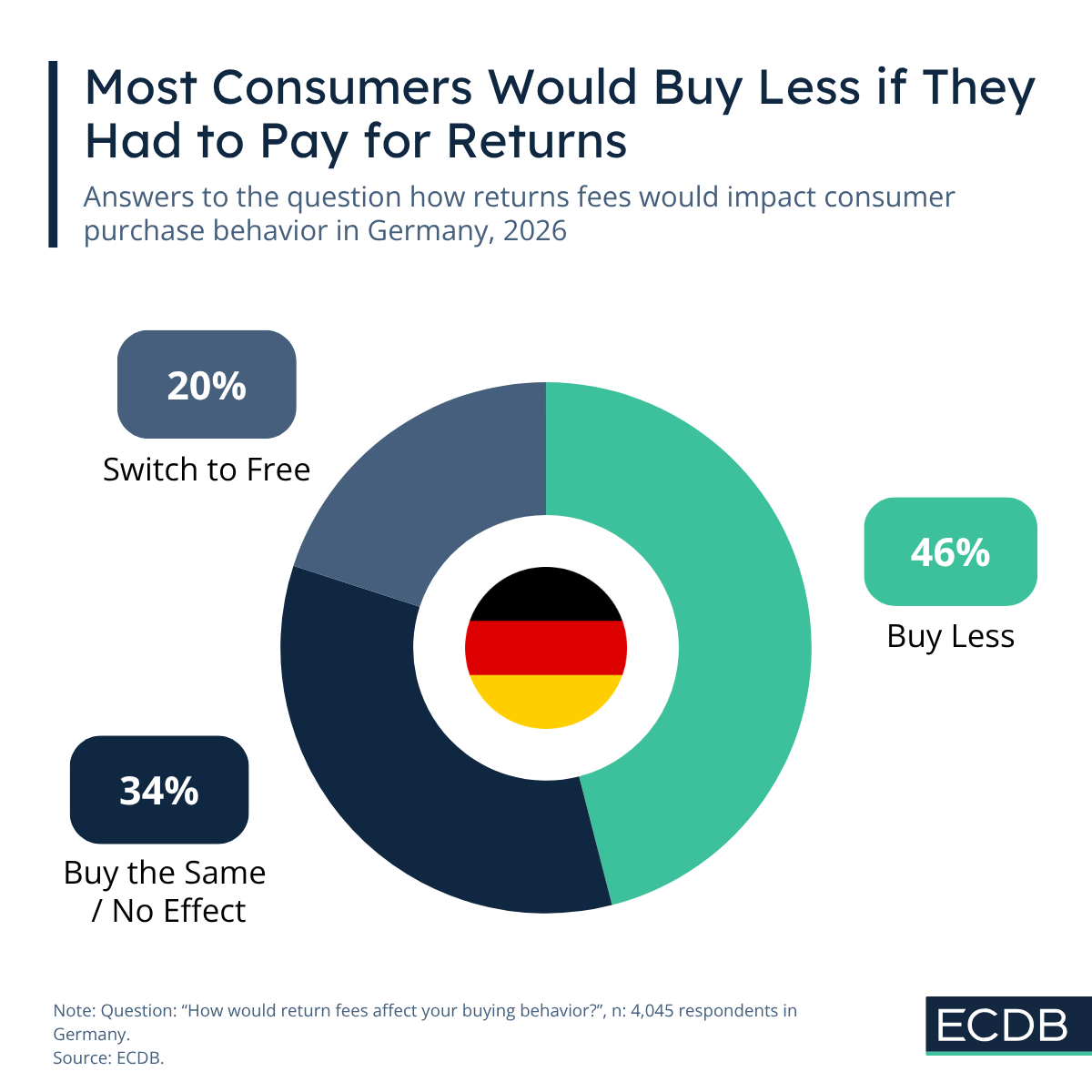
Only 34% say they would maintain their current shopping behavior without any impact from return fees.
The takeaway for retailers is clear: Return fees influence demand, which is why they must be considered as a factor in conversion and revenue performance.
Men Would Pay More For Returns Than Women
There are also observable differences between men and women in attitudes toward paying for returns. About 37% of men say they would be willing to pay €4 or more for returns, compared to 32% of women.
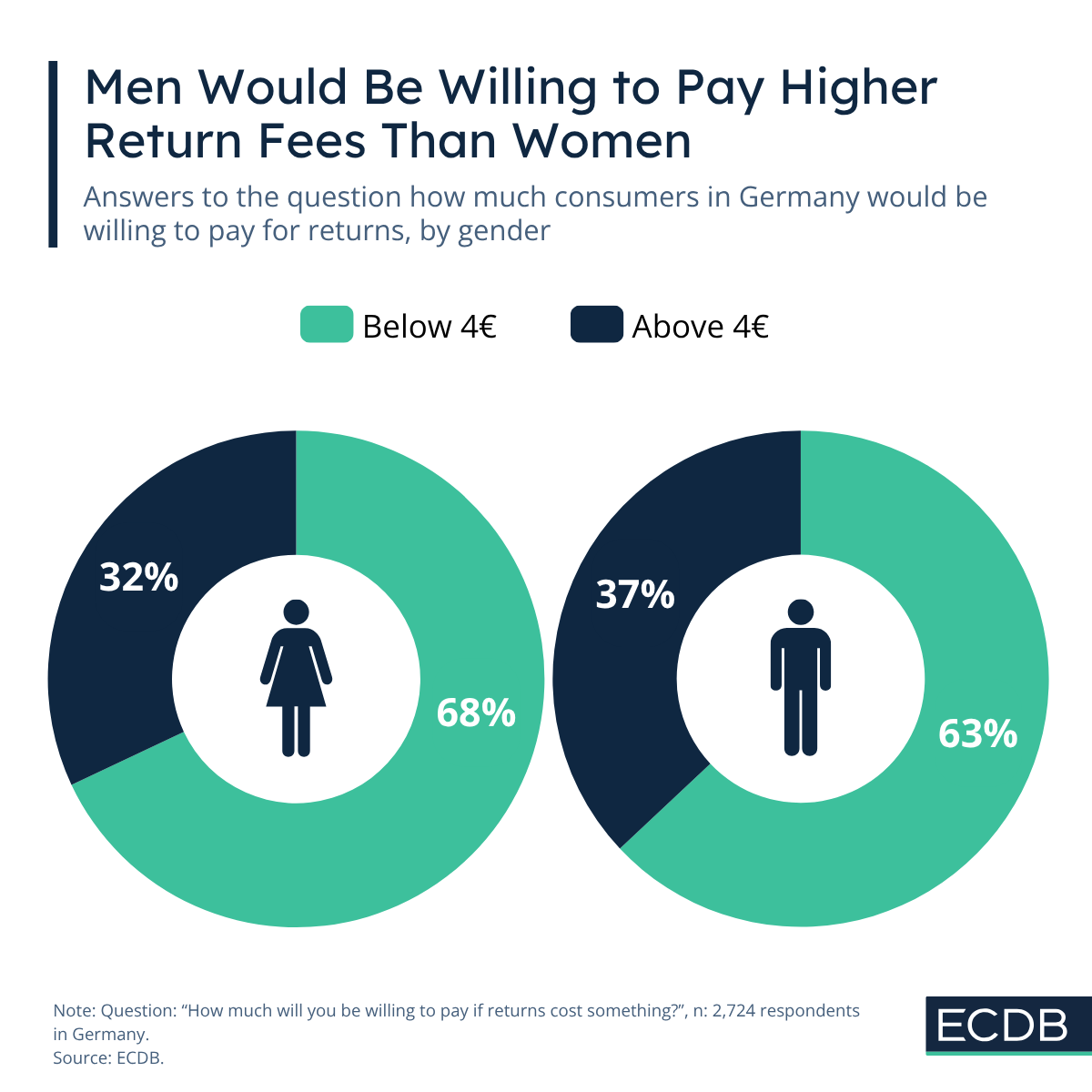
This gap comes down to different shopping preferences, particularly in terms of product categories and the tendency to buy items in surplus in order to try out different variations of the same product.
The Real Cost of Return Friction
Our research shows that returns directly influence how consumers shop, how much they buy, and where they choose to buy from. The survey data from German consumers makes this abundantly clear. Free returns are a baseline expectation for the majority of shoppers, especially in categories like fashion where fit and sizing play a role. At the same time, willingness to absorb return costs is limited and unevenly distributed across income groups and demographics.
For retailers, return expectations influence conversion, basket size, and long-term customer loyalty. The key implication is straightforward. Even small changes in return experience can have outsized effects on revenue dynamics, making returns one of the most sensitive levers in the e-commerce customer journey.
Related Articles
All ArticlesReady to Unlock the Full Power of ECDB?
Book a demo to see how ECDB's market intelligence can support your business.