Vinted Is Entering European Marketplace Rankings With Positive Expectations for the Future
Vinted is a reCommerce platform that allows sellers and buyers to exchange products, negotiate prices and follow users. Its distribution over European eCommerce is topic of discussion here.

Vinted is one of the marketplaces that is being widely talked about at the moment, for reasons that go beyond affordability. The reCommerce marketplace launched over a decade ago, but became widely known just a few years ago when it rebranded and combined many smaller local players under one guise.
What’s special about Vinted is its widespread appeal and contemporary relevance. The marketplace hit a nerve with consumers that generated effective marketing beyond traditional advertising.
Vinted is quick to set-up, easy to use and a secondhand platform where consumers can both sell and buy products at their convenience. Its spread all over Europe has turned heads in the last few months, which is why its distribution is topic of discussion here.
Vinted Applies a Tested and Tried Concept in a Way That Makes it Stand Out
Vinted launched early as a Lithuanian startup but acquired many smaller regional competitors. This strategy aided Vinted in acquiring a standing all over Europe that is now notable for its wide recognition and high ascend.
Vinted charges sellers no fee for offering products and provides services like buyer protection and delivery, which it charges on top of the seller’s price to consumers. It is therefore a popular platform for selling personal items without too much of a complex uploading process.
An additional feature of the marketplace is its social recommendation system. Users can rate their experience with sellers on the platform and follow accounts, exchange messages and negotiate prices.
The concept in and of itself is not entirely new, but Vinted has been applying it in a way that has made a splash in European markets. It is now present in a variety of European markets, the most successful of which are located on the Western side.
Vinted Is Successful in Europe and Expanding Further
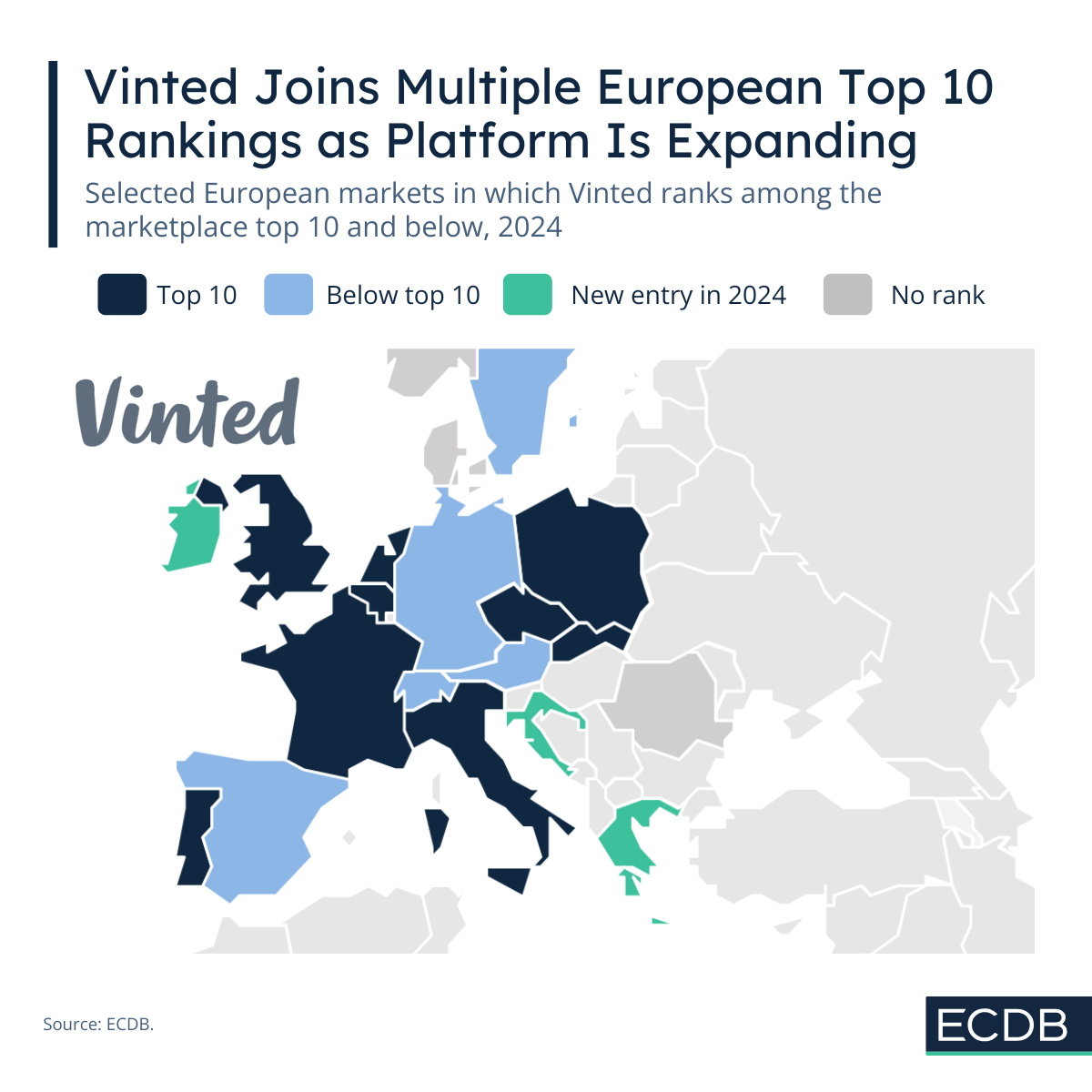
Vinted is present in the top 10 ranking of 10 markets: France (3rd), Poland (5th), Portugal (6th), Belgium (6th), United Kingdom (7th), Italy (7th), Netherlands (7th), Czechia (7th), Hungary (7th), Slovakia (8th).
Regional proximity benefits Vinted as it offers cross-border distribution of products. There are some markets where Vinted ranks among marketplace rankings, but not in the top 10.
They include Spain (11th), Austria (12th), Germany (15th), Switzerland (35th). The marketplace is otherwise not present in Scandinavia.
However, it newly launched in Greece, Ireland and Croatia in 2024. Its expansion is sure to follow in other European markets. What is it that makes its rise so sudden and widespread?
Why Is Vinted So Successful?
Vinted’s broad appeal comes from its alignment with shifting consumer values. Sustainability, affordability, and ease of use are central to its success. As awareness around environmental impact increases, more consumers are turning to secondhand platforms to extend product life cycles and reduce waste.
Vinted taps directly into this sentiment. It offers a straightforward, user-friendly platform that removes much of the friction typically associated with secondhand shopping. The community-driven features, such as user reviews, direct messaging, and social following, enhance trust between buyers and sellers – an essential component when purchasing pre-owned items. Return policies are generous at Vinted as well – consumers can send products back that don’t align with expectations.
Vinted’s Momentum Makes It a Platform Worth Watching
With a growing user base, strong brand recognition, and services tailored to both buyers and sellers, Vinted is experiencing an exceptional rise in the European online market.
If it continues to expand into new territories while refining its logistics and user experience, Vinted could well become the leading name in European reCommerce and a long-term fixture in the continent’s eCommerce landscape.
Related Articles
All ArticlesReady to Unlock the Full Power of ECDB?
Book a demo to see how ECDB's market intelligence can support your business.