E-Commerce Localization: Definition & Best Practices
E-Commerce localization means adapting a store for a specific market, currency, payment method, cultural norms and more. It is key to an international strategy in e-commerce.
Retailer Map
Discover where Europe’s top 100 e-commerce retailers are based and how they are spread across the continent.

Nadine Koutsou-Wehling
Data Journalist
January 26, 2026
Cross-Border eCommerce
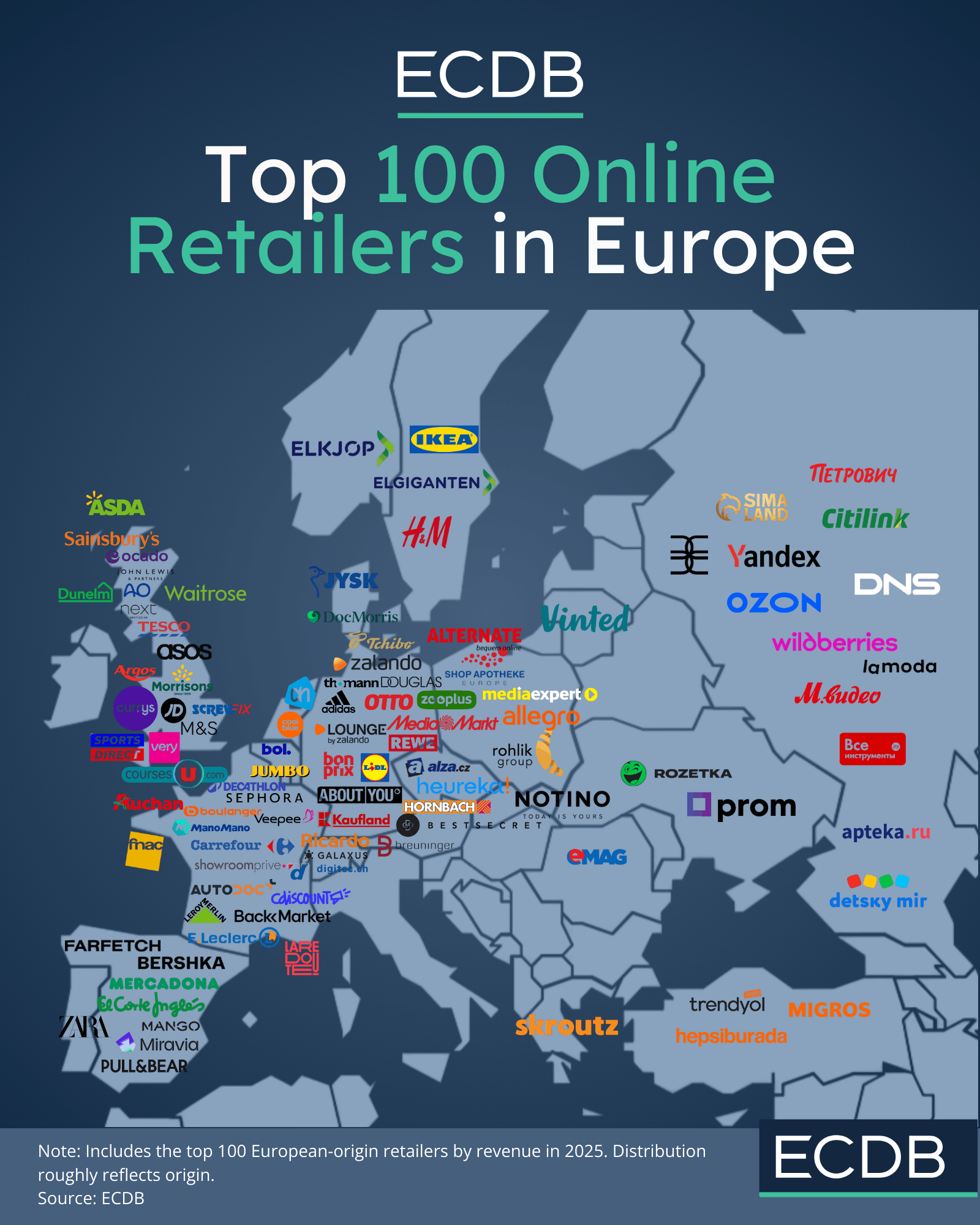
The top 100 online retailers in Europe are centered around brands with origin in Central and Western Europe, with a significant presence of Russian retailers in Eastern Europe. This distribution reflects both historical e-commerce infrastructure and regional consumer preferences.
Regional Dominance:
Russia has a strong presence in Eastern Europe, with multiple retailers like Ozon, Wildberries, Yandex, M.Video, DNS-Shop, Vseinstrumenti, Citilink, Lamoda, Sima-land, Apteka, Petrovich, and Detsky Mir. These primarily cover electronics, fashion, DIY, and care products.
Germany, France, and the United Kingdom dominate Western and Central Europe. German retailers such as Zalando, Otto, About You, and Adidas focus on fashion and electronics, while French players like Carrefour, Cdiscount, and Fnac span fashion, grocery, and electronics. The UK similarly features Tesco, Sainsbury’s, ASDA, Next, Currys, and M&S, primarily in fashion, grocery, and electronics.
Category Concentration:
Fashion is the most common sector, represented heavily by retailers across Germany, France, the UK, Turkey, Spain, and Russia.
Electronics is another major category, with Russia (Ozon, M.Video, DNS-Shop, Citilink) and Germany (Alternate, MediaMarkt) leading.
Grocery sees dominance by UK and German retailers, including Tesco, Sainsbury’s, ASDA, Lidl and Rewe, reflecting the growing trend of online food shopping.
Cross-Border Trends:
Certain retailers have expanded significantly across Europe, e.g., Zalando (Germany-based), ASOS (from the UK), Zara (Spanish-origin) and Veepee (France-based). They represent the rise of pan-European e-commerce platforms.
This map is based on ECDB-proprietary data. The data is adjustable and flexible within ECDB's ranking tool. There are many more regional specifications possible, tailored to your business needs.
Related Articles
E-Commerce localization means adapting a store for a specific market, currency, payment method, cultural norms and more. It is key to an international strategy in e-commerce.
JD.com acquires a majority stake of MediaMarkt-Saturn, parent company of which is the German company Ceconomy. The move will have broader implications on European e-commerce, particularly considering French electronics retailer Fnac Darty.
China accounts for most of cross-border sales in key markets. While the shares themselves vary from country to country, China's leadership remains consistent.

Click here for
more relevant insights from
our partner Mastercard.
Book a demo to see how ECDB's market intelligence can support your business.