

The Problem

You See Your Own Sell-Out, Not the Competitor Set Around You

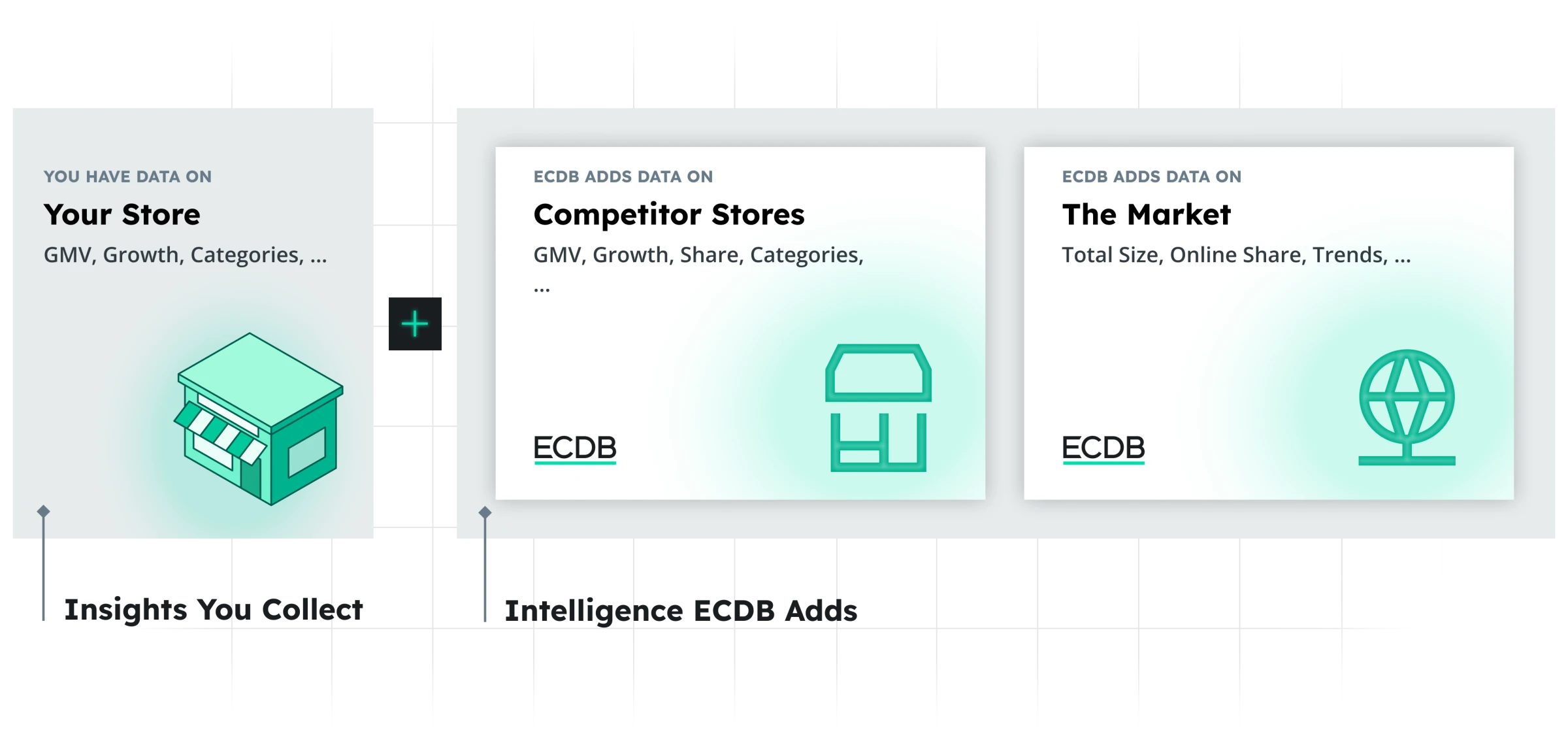
Internal systems show what you sold. They say nothing about the market around you. Estimating competitor performance from job postings and press releases is not measurement.

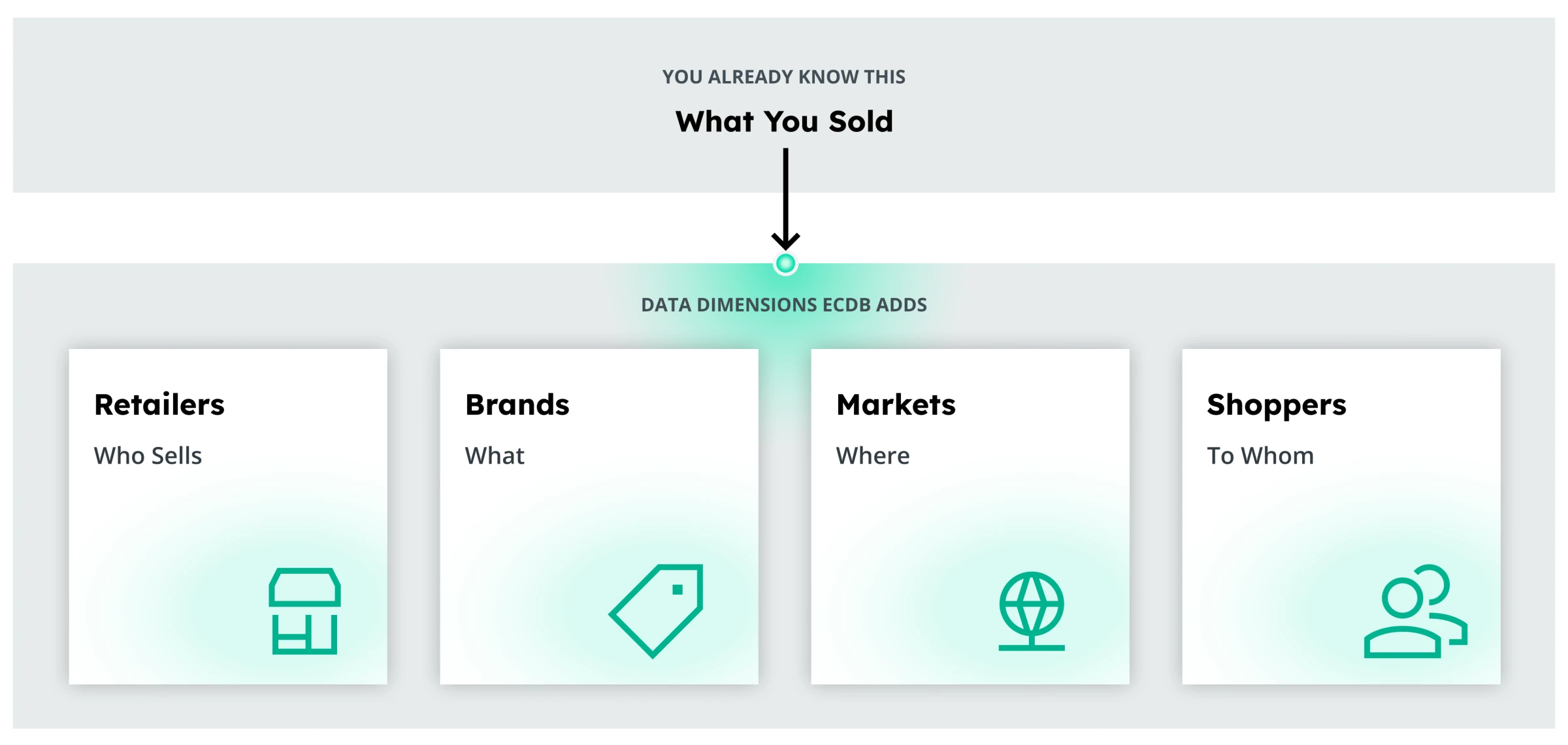
The data you already have, next to the data ECDB adds

What the Blind Spot Costs You

Without ECDB

Expansion Decided on Gut Feel

Market entry gets picked by hearsay, not by measured demand.

With ECDB

Expansion Decided on Measured Demand

Market entry follows actual size and growth.

Without ECDB

Share Loss Noticed Too Late

A competitor's growth shows up after a reporting cycle has passed.

With ECDB

Share Loss Spotted Early

Competitor performance is available on a monthly basis.

Without ECDB

Board Questions You Can't Answer

"How big could we be in this market" needs an external number.

With ECDB

Board Questions You Know the Answer To

An external number you can stand behind.

Our Solution

We Rank Every Store on the Same Method, Including You

Everyone in e-commerce sees one slice. Rankings apply one definition of GMV to every covered store, so your own position is directly comparable to any competitor's, without adjusting for how each of you reports.

The question you start with, and the data dimensions ECDB adds to answer it

Ranked Next to Competitors on One Method

Direct GMV and growth comparison against every covered store, no self-reported numbers to reconcile.

Every Market on One Scale

The same ranking method runs in every country you compete in, so a competitor ranked in one market is directly comparable to the same store in another.

Ask Any Question, Get an Answer Right Away

Start with the market, a competitor or a category. Every view runs on the same data, so a question about share leads straight to the stores and buyers behind it.

Example Use Cases

Start With the Question Closest to Your Job

These are the questions retail teams most often ask. Each one is a worked example on a real market and category, and each one combines two of the four datasets above.

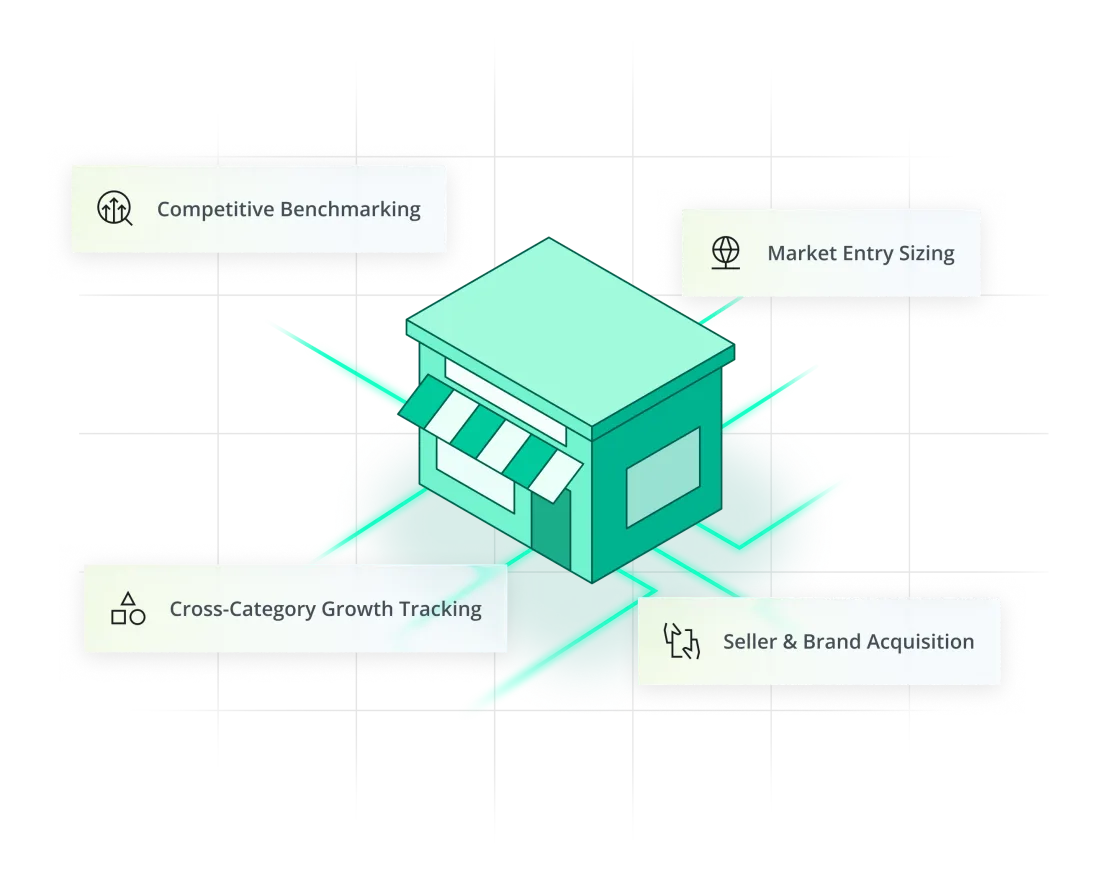
Competitive Benchmarking
Example Germany Fashion & Apparel

Where Do You Actually Rank, and Who Shares Your Customers?

"Where do we stand against Zalando and the rest, and which competitors share the customers we could actually win?"
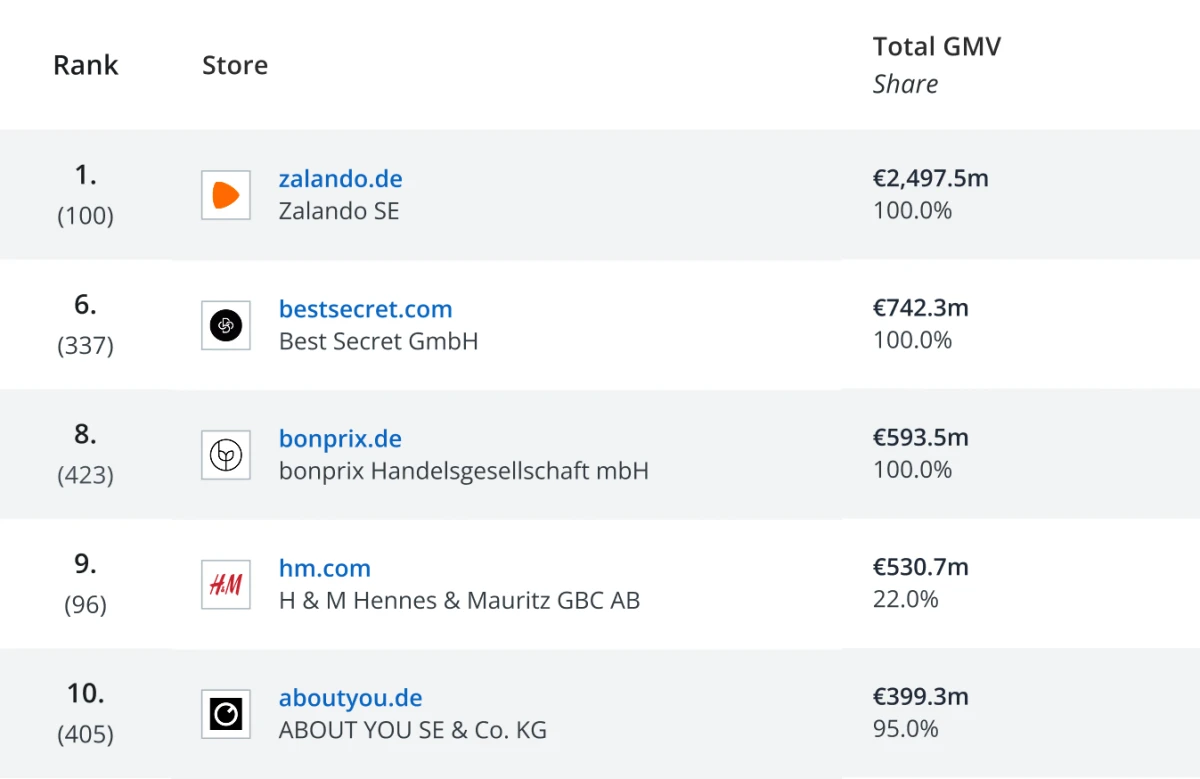
  • Zalando is pulling away, so the useful benchmark sits one tier below. Zalando sells more apparel than the others. You gain more by measuring yourself against BestSecret, bonprix, H&M and About You, where the gaps are small enough to close.
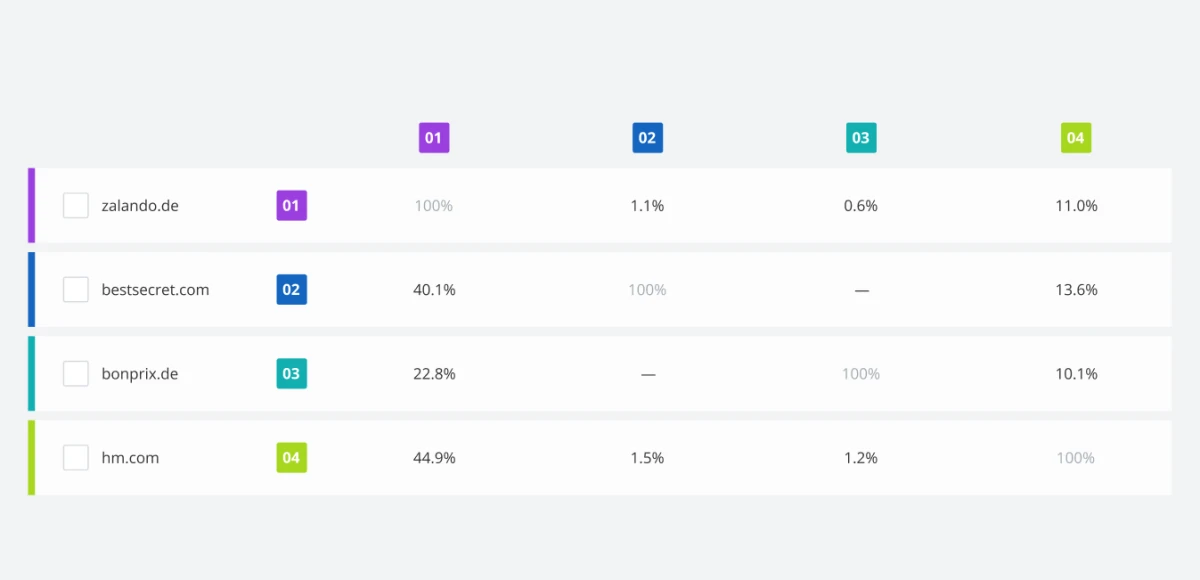
  • Zalando's buyers stay with Zalando. At most 11% of them also shop at one of the other stores, so winning its core customers takes heavy investment for little return.
  • The shoppers you can win are the ones who already compare stores. 40% of BestSecret's buyers and 45% of H&M's also shop at Zalando. They move between retailers, which makes them the most realistic source of new customers for you.
  • bonprix and BestSecret share no buyers with each other, and bonprix's customers rarely shop elsewhere. A clear position shows where you can carve out your own space.
Draws On
  • Who SellsRetailers
  • WhatBrands(not used)
  • WhereMarkets(not used)
  • To WhomShoppers

Apparel GMV, Germany 2025

in million EUR

Ranking of apparel stores in Germany by GMV in 2025

Size Is Not the Same as Momentum

Line chart of buyer overlaps between leading apparel stores

Source: ECDB, modeled data. Ranking in Online Apparel and annual growth of select retailers. This is not a complete ranking.

Built for Retail Teams at Companies Like These
  • Zalando
  • Otto
  • Douglas
  • Bike24
  • About You
  • MediaMarkt
  • Conrad
  • Coolblue
Success Stories

Same Job. Same Reporting Line. Same Problem.

Three retail teams describing what changed once market data came from one consistent source instead of manual research.

Multi-Category Online Retailer

DACH

We finally see our own ranking move in the same table as the competitors we actually compete with.

Head of Competitive Intelligence
Before
Competitor performance was estimated from traffic tools and public statements.
What Changed
A standing GMV and growth ranking across the full competitor set, refreshed every quarter.
Result
Category budget reviews now start from the ranking instead of ending in a debate about whose estimate to trust.

Specialist DIY Chain

Benelux

The expansion case for a second country finally had a number nobody in the room could push back on.

Director of Strategy
Before
Expansion decisions leaned on the sales team's read of a market.
What Changed
Market sizing and a ranked competitor set for each candidate country on the same method.
Result
Two markets were reprioritized against the original plan before any budget was committed.

Regional Electronics Retailer

Southern Europe

Category growth had been slowing for a year and internally nobody wanted to be the one who confirmed it.

Head of E-Commerce
Before
Assortment reviews ran on gut feel about which categories were underperforming, without a consistent growth measure behind them.
What Changed
A category by category GMV growth tracker against the top tracked competitors, reviewed every six months.
Result
Two underperforming categories were identified and reworked before the next planning cycle, rather than a year later.

Bring Your Own Category to the Demo.

Tell us the category and the markets you plan for. We will run these views on your data in the meeting, not as a follow-up.

Book a Demo

Frequently Asked Questions

Ready to Unlock the Full Power of ECDB?

Book a demo to see how ECDB's market intelligence can support your business.