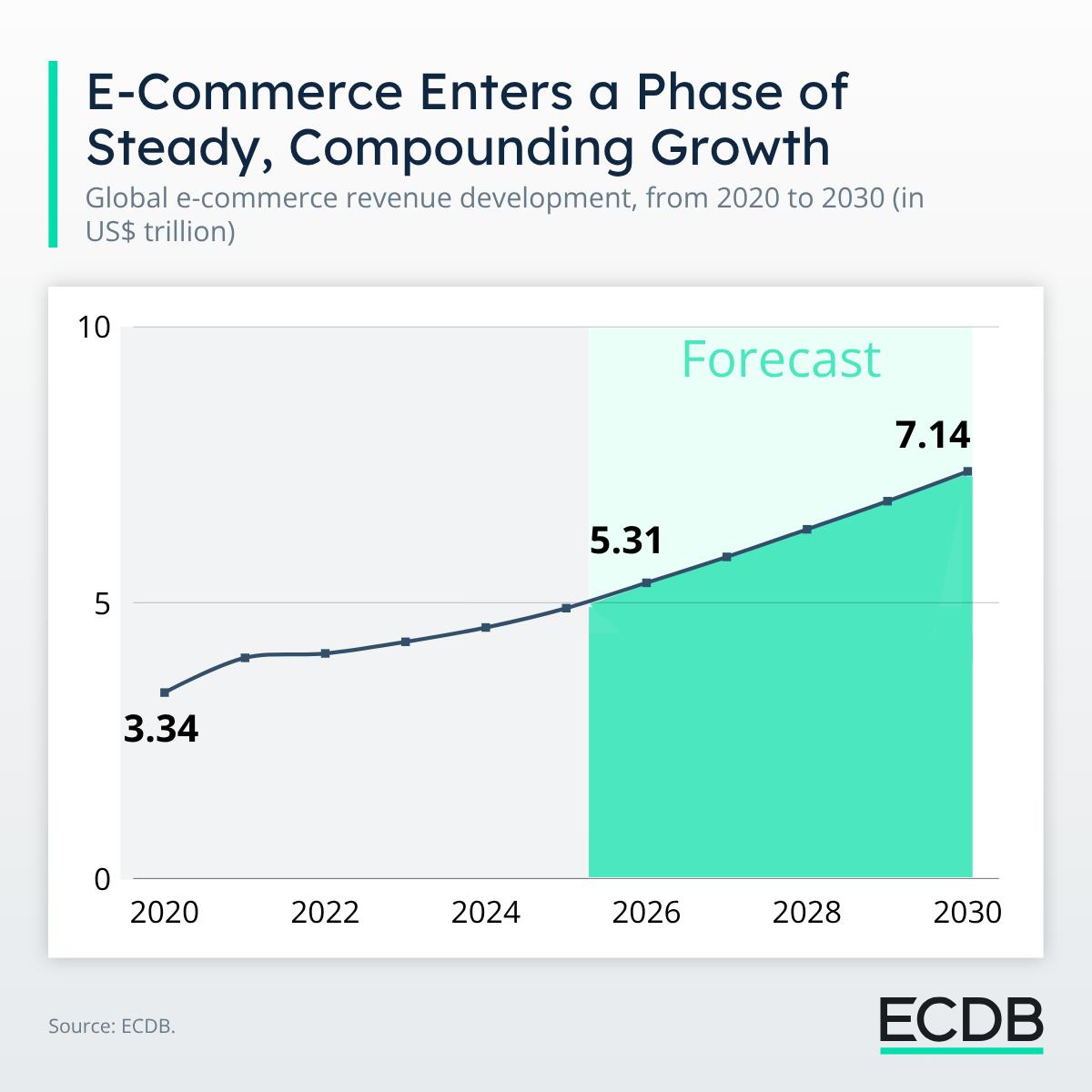
Global e-commerce is reaching a new milestone. In 2026, the market is projected to surpass US$5 trillion in revenue for the first time. But this is only another step in a much larger transformation.
According to our forecast, global e-commerce revenue is expected to exceed US$7 trillion by 2030. This growth will be driven by a combination of structural developments that reshape how consumers discover, purchase, and receive online products.
The Next Phase of E-Commerce Growth
E-commerce has already established itself as a major revenue driver in core markets worldwide. The next stages of growth will come from increasing access in the world, as well as improved convenience to online shopping for users. Ultimately, the digital purchasing experience is becoming increasingly seamless and attractive compared to physical retail.
Here are the key developments driving the continued reaching of new milestones in global e-commerce:
Emerging Markets Continue to Expand the Global Opportunity
While established e-commerce markets remain significant contributors to global revenue, an increasing share of future growth will come from emerging regions.
Latin America, Asia-Pacific, and Southeastern and Eastern Europe are expected to play an increasingly important role as several factors come together. They include improving internet access, accelerating digital adoption, and growing consumer trust in online shopping.
Structural factors in emerging regions contribute to an increasing online consumer base. Growing middle classes, expanding smartphone penetration, and improved digital infrastructure are enabling millions of new consumers to participate in e-commerce for the first time.
AI Will Make Online Shopping More Personal
Artificial intelligence is expected to fundamentally change the way consumers interact with digital commerce. AI assistants provide personalized recommendations and help research. Right now, they are paving the way to automated shopping assistants.
All in all, AI capabilities are reducing friction throughout the customer journey. Instead of navigating thousands of products manually, consumers will increasingly receive more relevant suggestions based on their preferences, behavior, and purchasing patterns.
Payment and Logistics Enable Faster and More Convenient Online Shopping
The continued development of payment and logistics infrastructure benefits e-commerce growth worldwide.
Mobile wallets, instant payment solutions, and localized payment methods are making online transactions easier and more accessible across markets. With a maturing payment infrastructure, more consumers will be able to participate in digital commerce without relying on traditional banking systems.
Investments in logistics networks, fulfillment capabilities, and last-mile delivery solutions are making faster delivery possible across more markets. Quick commerce is becoming increasingly significant in urban areas. This reflects a shift in what expectations consumers have in delivery and accessibility of their online orders.
Everyday Goods Will Become a Larger Part of Online Spending
The future of e-commerce growth is not only about occasional purchases. Increasingly, everyday essentials are becoming a key driver of online revenue.
Consumables and replenishment categories such as groceries, household goods, and personal care products benefit from recurring demand. By 2030, repeat purchases will represent a much more important share of e-commerce activity.
Combined with the aspects just discussed, improving logistics and payment infrastructure, as well as automated reordering models, , these developments are accelerating the growth of everyday essentials in e-commerce.
Online and Offline Commerce Will Continue to Converge
The distinction between online and offline retail is becoming less relevant.
Omnichannel strategies allow consumers to move seamlessly between digital and physical touchpoints, while vertical specialization enables retailers to optimize experiences for specific categories and customer needs.
Preparing for the Next Five Years of E-Commerce
The path toward a US$7 trillion global e-commerce market is the result of multiple trends reinforcing each other. More consumers will purchase online. Shopping experiences will become more personalized. Payments will become simpler. Delivery will become faster. And automation is making its way into the mainstream.
Unless unexpected developments significantly change this trajectory, the next five years will continue building toward a digital economy centered around convenience and frictionless commerce.