When people think about e-commerce growth, they often picture expensive electronics, luxury fashion, or major household purchases. Yet the highest growth opportunities through 2030 tell a different story.
According to our latest projections, some of the fastest-growing product categories are not occasional purchases but everyday essentials that consumers buy repeatedly. Rather than one-off transactions, these categories benefit from recurring demand, making them well positioned for long-term e-commerce growth. That is because purchasing these products becomes a habit, which improves retention and lifetime customer value.
Replenishment as a Key Driver to Growth
A keyword across these fast-growing categories is replenishment. As e-commerce grows and becomes ingrained into everyday life, consumers prefer the convenience of ordering products online and receiving them to their doorstep rather than visiting multiple stores physically.
A few clicks are often enough to place an order, while expanding quick commerce networks and faster delivery services make waiting less of a barrier than ever before. With improving delivery speeds and maturing online grocery ecosystems, recurring household purchases are becoming a larger share of overall e-commerce spending. This includes better price comparison as well, as online offers tend to be more transparent in that regard.
The Categories Benefiting Most
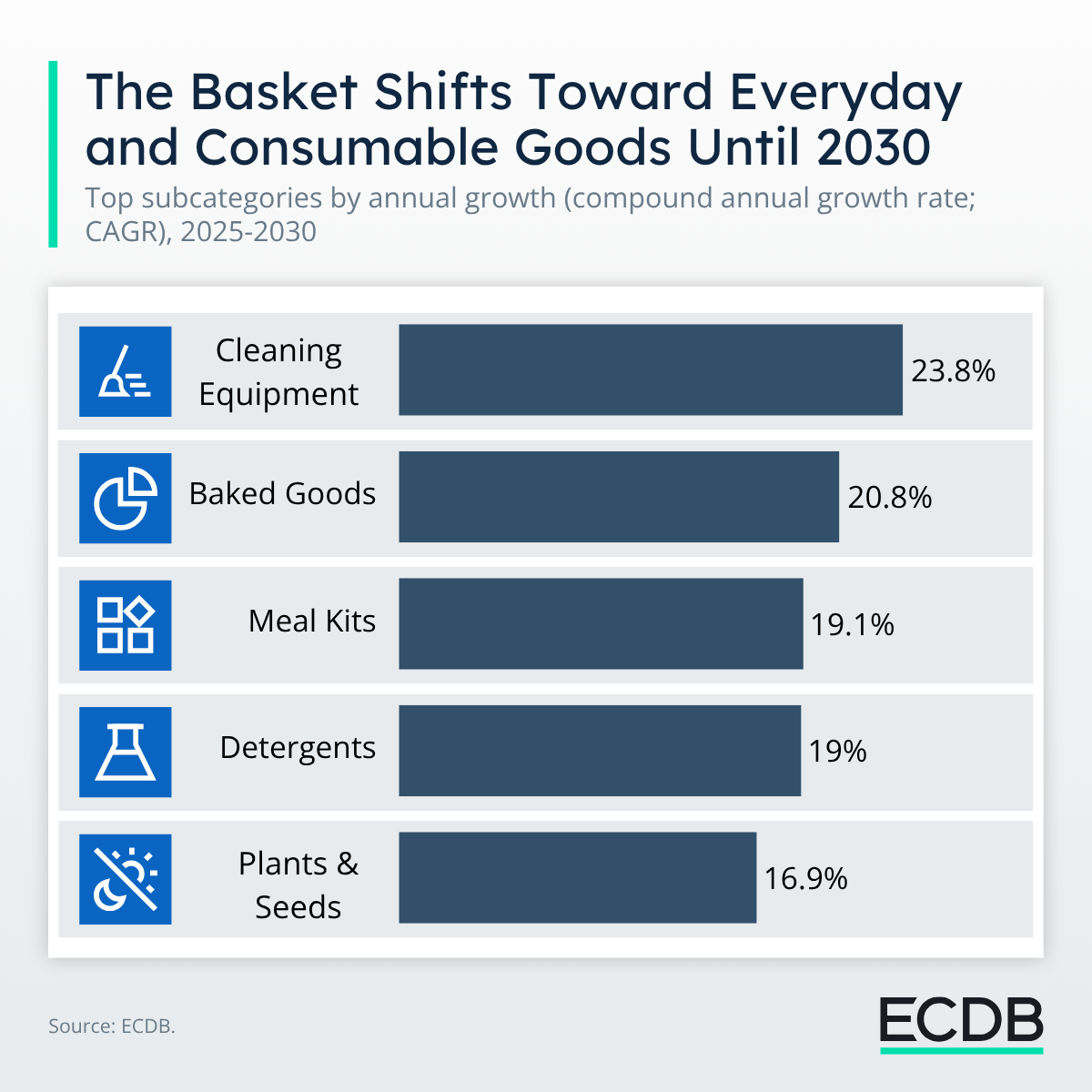
We identified several caregories that are expected to see the most significant growth from 2025 through 2030, measured in CAGR (compound annual growth rate):
Cleaning Equipment
Products such as mops, buckets, brooms, dustpans, cleaning cloths, sponges, and scrubbers may not attract much attention individually, but they represent recurring household purchases that consumers replace regularly. By 2030, the category is forecast to grow at a CAGR of 23.8%.
Baked Goods
Fresh bread, pastries, cakes, and pies are increasingly becoming part of online grocery baskets. A growing infrastructure benefiting delivery of perishables through increasing quick commerce offers contributes to the appeal of baked goods online delivery. Their CAGR (2025-2030) is set at 20.8%.
Meal Kits
Meal kits combine convenience with predictable purchasing behavior. By delivering ingredients and recipes together, they reduce shopping effort while encouraging repeat purchases through subscriptions and recurring orders. This subcategory is projected to grow at a CAGR of 19.1% by 2030.
Detergents
Laundry detergents, dishwashing liquids, and multi-surface cleaners are classic replenishment products. Since households continuously need them, they naturally lend themselves to automated reordering, given that this technology will have reached the mainstream by then.
Plants & Seeds
Gardening has evolved into an increasingly popular online category. Including flowering plants and shrubs, as well as herb plants, fruit trees, and seeds, consumers are becoming more comfortable ordering living products online as retailers improve shipping methods. On rank 5, this subcategory is predicted to grow at a CAGR (2025-2030) of 16.9%.
Future Predictions Depending on Market Context
Success increasingly depends on reducing friction in the buying process. The categories expected to grow most through 2030 reflect changing consumer expectations and habits in e-commerce over the time. Given the assumption that automated reordering will by then have become more widespread, this will impact the growth predictions of categories further.