Amazon's Competitive Advantage Is the Number of Times Customers Return
The average customer buys 19.5 times a year at Amazon, much more often than at its competitors. What factors bring customers back to the site that often?

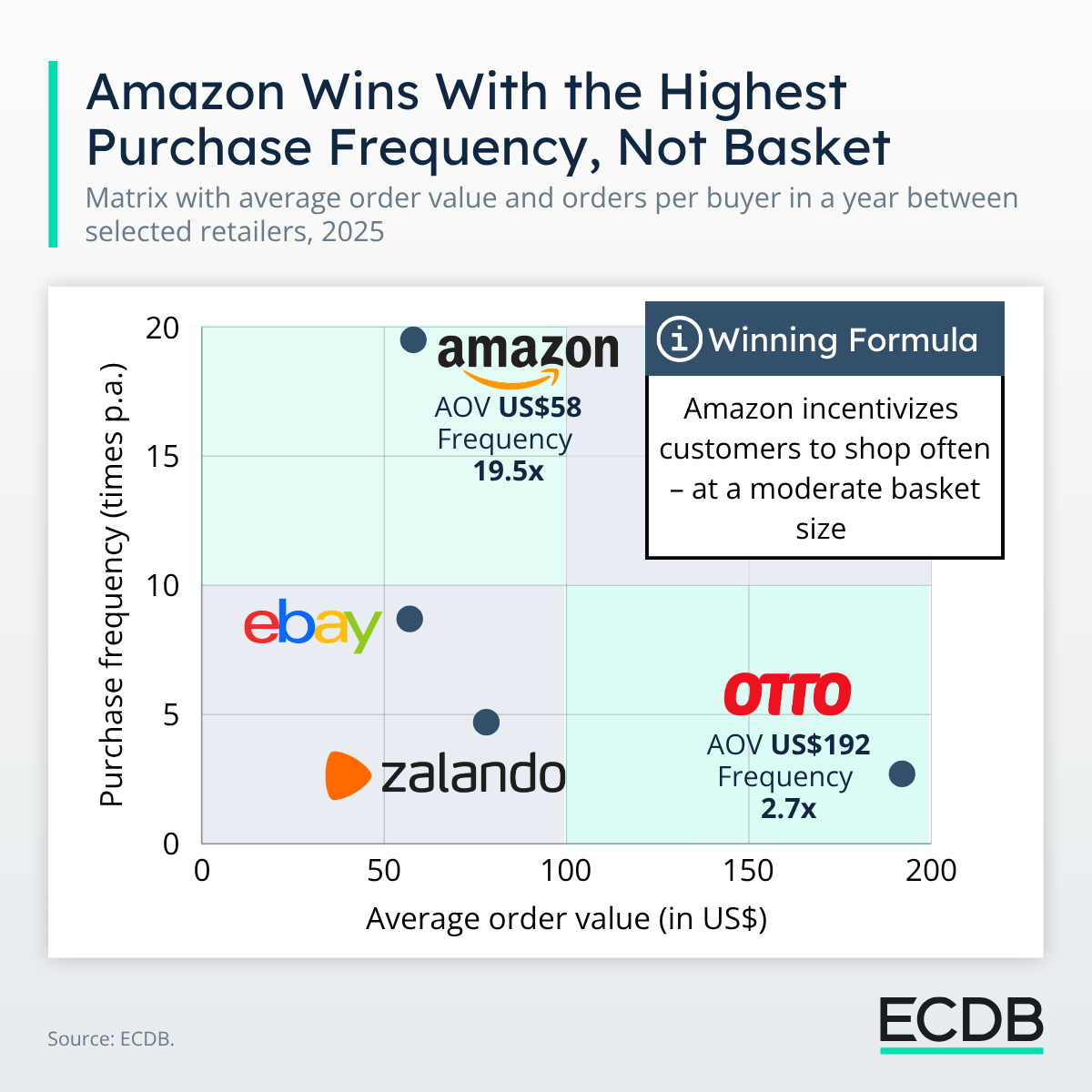
Amazon is the largest online retailer in the world, and one number explains a large part of why: the average Amazon customer places 19.5 orders per year. No other major retailer comes close to that frequency, and it says more about Amazon's business model than almost any other metric available.
What makes that number more interesting is what it is paired with. Amazon's average basket size sits at a relatively modest US$58. Put the two together and a clear pattern emerges: Amazon customers place small orders constantly, treating the retailer like a default habit for everyday shopping.
The Drivers Behind Amazon's High Frequency: Fast Delivery, Subscription, Discounts
Fast delivery times remove the friction that normally makes people batch purchases together to justify shipping costs or wait times. Prime membership adds a psychological push in the same direction, since subscribers already feel they are paying for the benefit and want to use it.
Recurring discount events give customers fresh reasons to come back throughout the year rather than stock up once. Prime Day is the most obvious example, and if it has ever nudged you into ordering something you did not plan to buy that week, you are proof of exactly how well the model works.
Other Retailers Fall Behind in Frequency, Otto Has Notably High AOV
Otto sits at the opposite end of the spectrum. Its average basket size jumps to US$192, more than three times Amazon's, but customers only shop there about three times a year. Where Amazon has built a high frequency, low value habit, Otto has built something closer to a traditional retail relationship, where customers plan bigger purchases and return only occasionally.
The other major retailers fall between these two extremes, and each shows a slightly different version of the tradeoff. eBay's average basket size is nearly identical to Amazon's at US$57, but its customers return far less often to buy again. Zalando's average basket size climbs to US$78, while its customers purchase about 4.7 times per year, a pattern that fits its focus on fashion.
Clothing and footwear are categories people simply do not buy every week, so even a well run fashion retailer will show lower purchase frequency than a general merchandise or grocery platform by the nature of what it sells.
Key Takeaway: Amazon's Competitive Advantage
Amazon's version of that fit happens to be the most valuable one available. By becoming a low friction default for constant, small purchases rather than a destination for occasional big ones, Amazon has made itself part of how people shop day to day rather than a store they visit with intent.
That kind of habitual repeat business is difficult for any competitor to replicate, and it remains one of Amazon's clearest advantages over retailers built around bigger, less frequent purchases.
Related Articles
All ArticlesReady to Unlock the Full Power of ECDB?
Book a demo to see how ECDB's market intelligence can support your business.