Amazon's Performance Reveals the Market Structure in Its Leading Markets
Amazon.com is by far Amazon's most important domain, but its relative importance in US e-commerce doesn't reflect that. The underlying market structure explains the divide.

Article in a Nutshell
Amazon's market share varies widely by country.
In Japan, fewer large competitors allow Amazon to capture a larger share of revenues.
In the competitive US market, Amazon leads in absolute GMV but holds a smaller relative share.
Market structure ultimately determines who wins in e-commerce. This involves competition, concentration and the prevalence of local, closed-off ecosystems.
A closer look at Amazon performance across markets shows how market structure determines the winners in e-commerce. While Amazon is the number one e-commerce retailer in some markets, its absolute power does not translate into relative strength everywhere.
Where Amazon's Relative Strength Is Highest
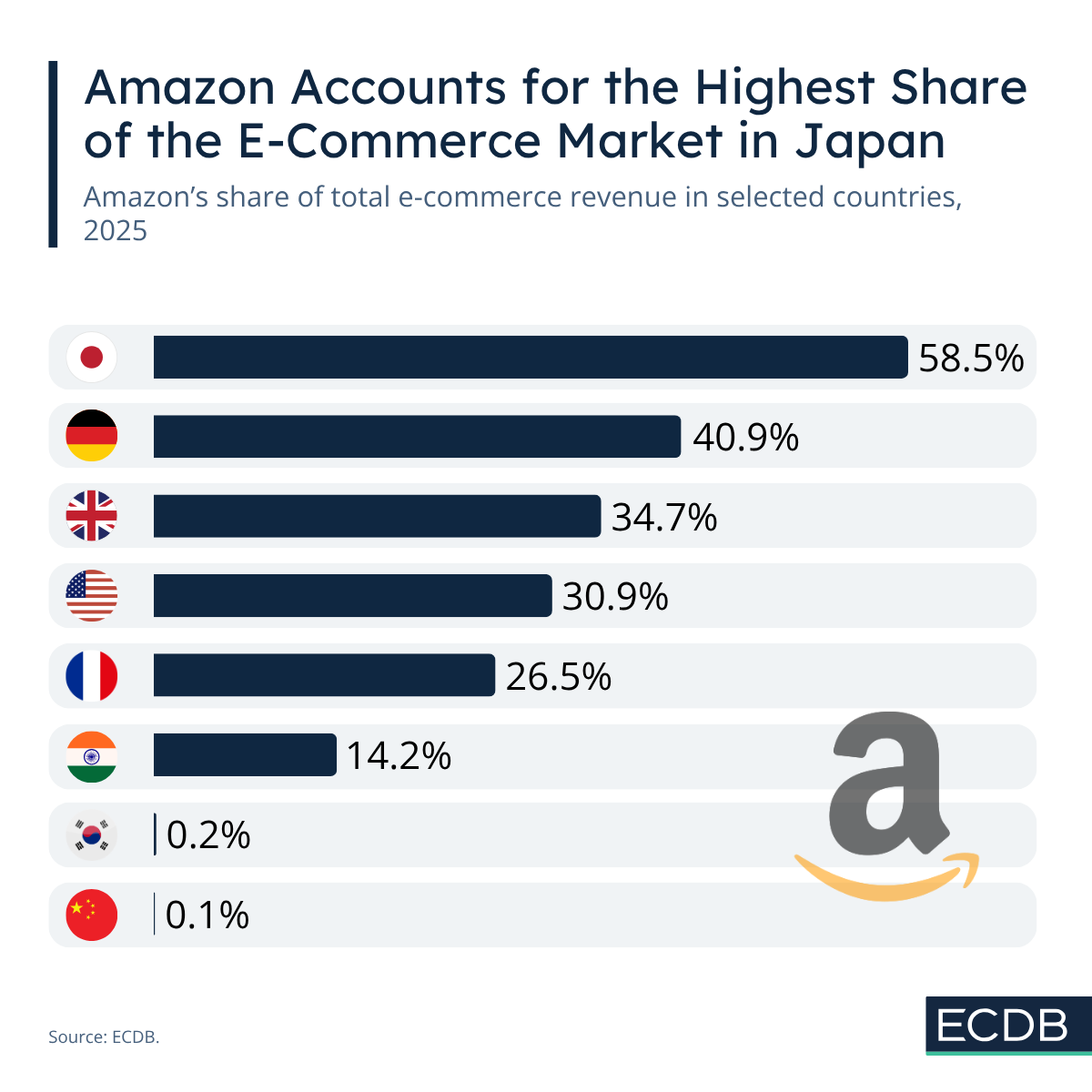
In Japan, Amazon accounts for 58.5% of e-commerce market revenues. Yet, Japan is not Amazon’s most important domain in absolute terms.
So why does Amazon dominate Japan more heavily, despite the US being its home turf and largest revenue driver? The answer lies in market structure.
In Japan, the competitive landscape is relatively concentrated. While Amazon faces a domestic rival in Rakuten, the overall number of major players is limited. This creates an environment where leading platforms can capture a larger share of total revenues. Therefore, Amazon maintains a commanding position.
Germany presents a similar, though less extreme, case. The country has several established domestic players and well-developed e-commerce strategies, yet Amazon still leads the market. But its dominance is not as pronounced as in Japan. This reflects a slightly more competitive and diversified e-commerce ecosystem.
The Amazon.com Domain Dominates Global GMV
Contrast this with the United States, where Amazon’s relative dominance drops to 30.9% of market revenues. In absolute terms, however, the US is most important. Amazon.com generates the large majority of product sales, with US$434 billion. Of that, 96.7% comes from the US alone.
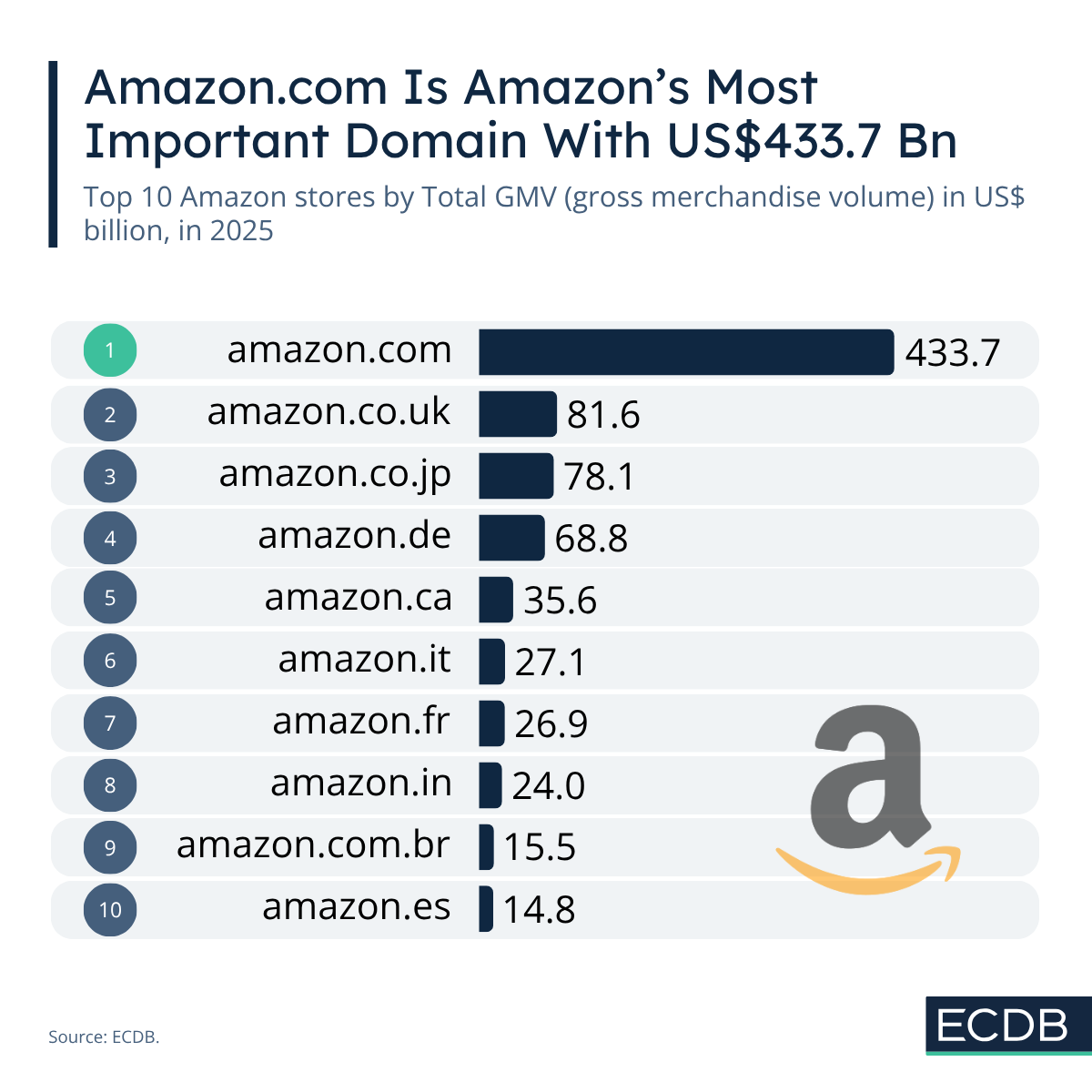
The United States is highly competitive. Retail giants like Walmart and Target, marketplaces like eBay, and a long tail of direct-to-consumer brands all compete for their share of the market.
There are also notable exceptions to these patterns. In South Korea and China, domestic ecosystems are in the lead. Local champions have built deeply integrated platforms that go far beyond traditional e-commerce. They create high barriers for foreign competitors and consolidate power within their own market.
Market Structure Determines Leadership
Size alone does not determine market leadership. Instead, it is the structure of the market: the number of competitors, the level of fragmentation, and the strength of local ecosystems, which ultimately shape who captures the largest share.

Related Articles
All ArticlesReady to Unlock the Full Power of ECDB?
Book a demo to see how ECDB's market intelligence can support your business.