Behind Every Return: How Demographics and Categories Shape Online Returns
Age and gender shape how US shoppers buy online, and even more how they send things back. Here is how demographics shape online returns.

Article in a Nutshell:
79.8% of US shoppers aged 18 to 25 returned products, compared with 50.1% of 55- to 64-year-olds.
Older shoppers return less often but send back more value. More than 60% of returners aged 55 and older send back over half of their order value, against 16.6% of 18- to 25-year-olds.
Fashion leads returns, with more than a third of fashion shoppers returning a purchase in the past 12 months. Grocery follows at 28.4%.
Women return fashion and care products more often, men return more electronics and groceries.
Picture two online shoppers. A 22-year-old orders a jacket in three sizes and sends two back. A 60-year-old orders a coffee machine and returns the whole thing.
Both count as one return. For the store, they are very different events.
In e-commerce, returns belong to the essential conveniences consumers like to take advantage of. Free return labels and generous return windows have made sending something back a routine step of online shopping. Yet return behavior varies widely by age, category and gender in the US.
Younger US Shoppers Treat Returns as Part of the Purchase
As a rule of thumb, younger US shoppers return products more often, but at lower values. 79.8% of 18- to 25-year-olds returned products. Among 55- to 64-year-olds, only a little over half (50.1%) sent something back.
Order value runs the other way. If older shoppers return a product, they send back higher shares of their order. More than 60% of returners aged 55 and older send back more than half of the order value. Among 18- to 25-year-olds, the share is 16.6%.
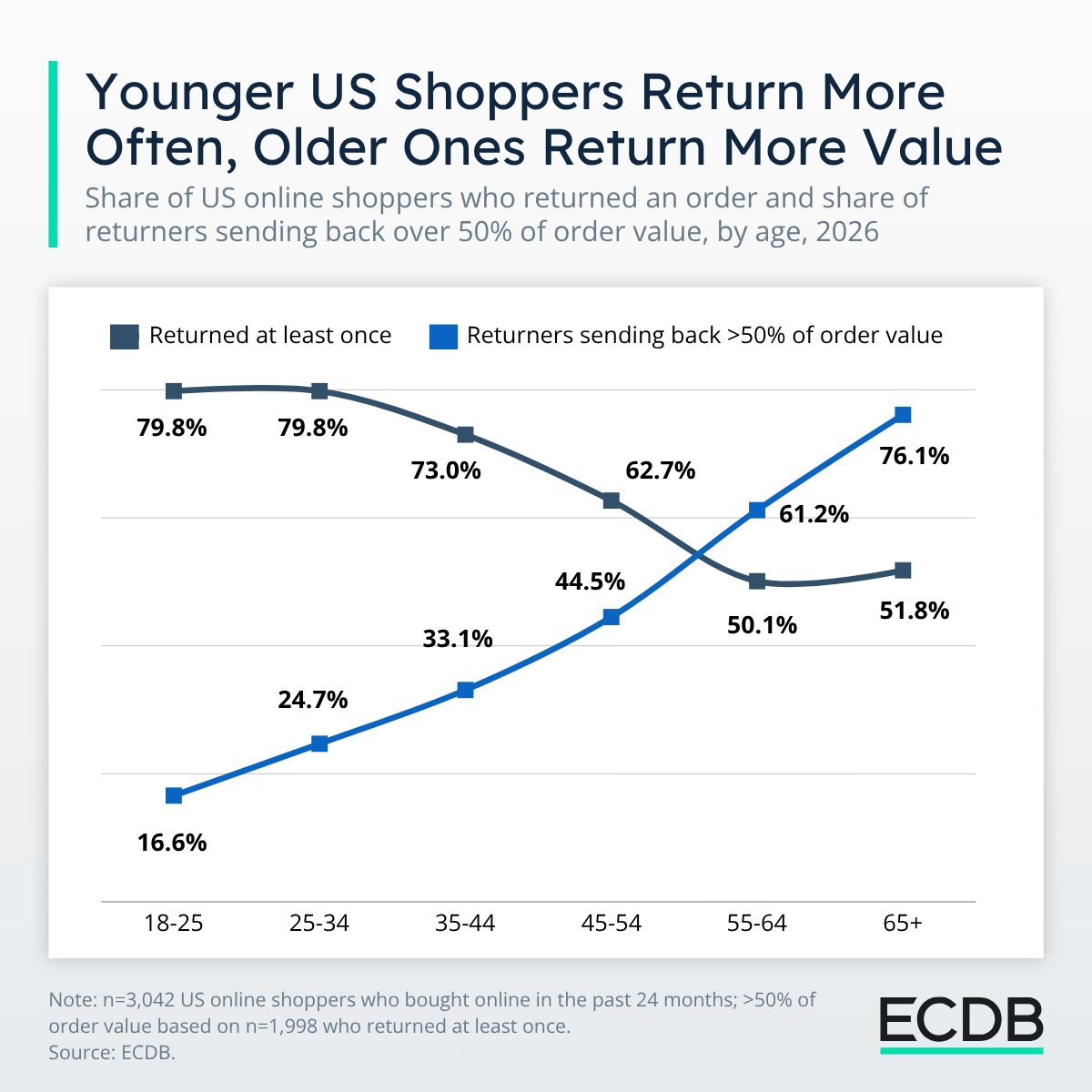
Younger shoppers tend to order several items and send few of them back, a behavior called bracketing. Older shoppers tend to place fewer, more considered orders. A coffee machine, a vacuum cleaner, a pair of headphones. When such a product misses expectations, the full order often goes back with it.
Fashion and Grocery Are the Most Returned Categories
Bracketing is particularly common for fashion items, as consumers order the same item in several sizes with the plan to send back what doesn't fit. Fit, color and fabric are hard to judge on a screen. The fitting room moves to the living room, and whatever fails the test goes back in the box. That is how fashion comes out on top of returned items, with 34.8% of fashion buyers sending a fashion item back.
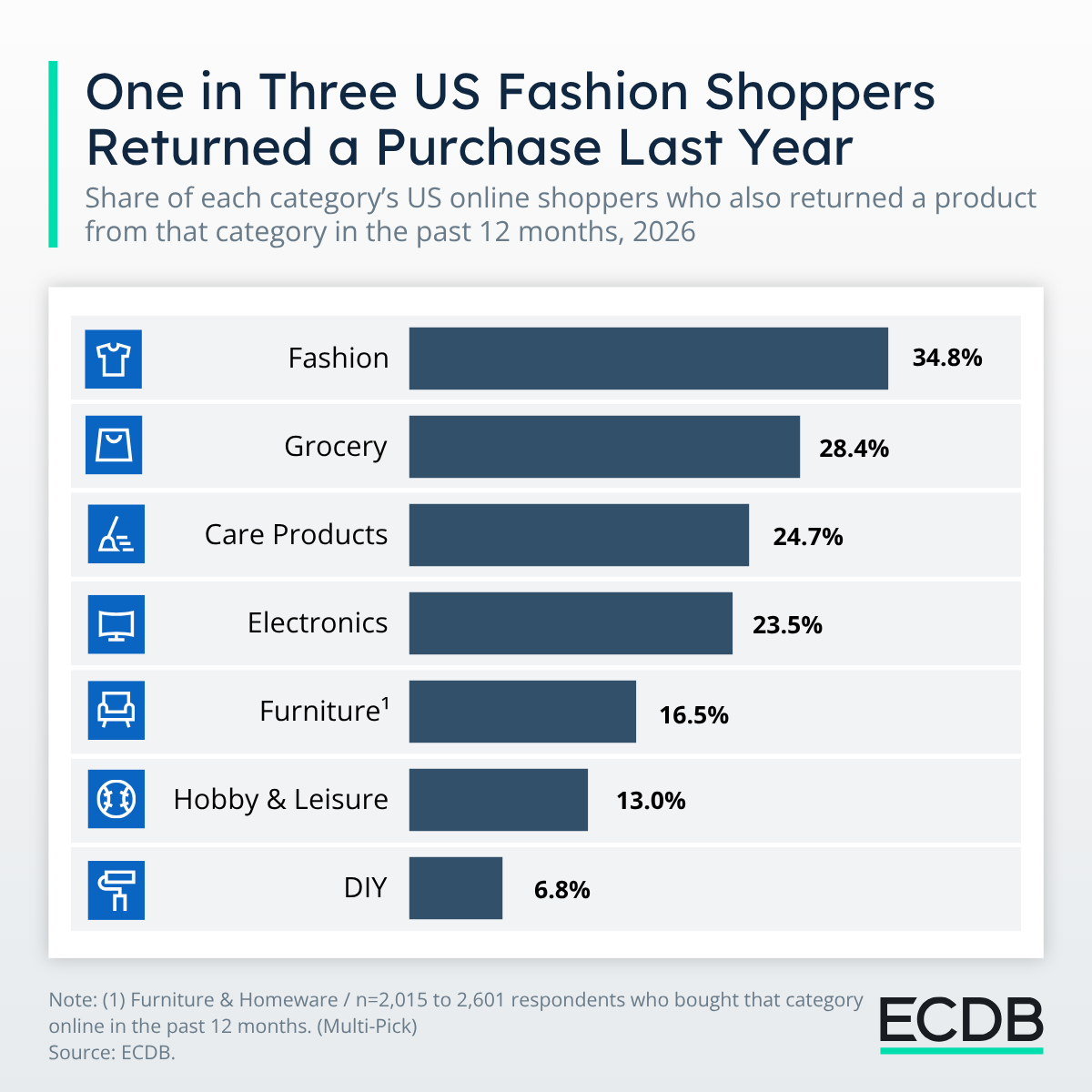
A big surprise in the sample is grocery. For this category, 28.4% of grocery shoppers sent an item back in the past 12 months. That is a high share for food & beverages. Damaged packaging, spoiled produce or substituted items make for quick refund claims. Fresh goods leave little room for debate when something arrives in poor condition.
The remaining products follow a little further behind:
Care Products were sent back by 24.7% of care product shoppers
Electronics by 23.5%
Furniture & Homeware by 16.5%
Hobby & Leisure at 13.0%
DIY at 6.8%
It seems that the more considered a purchase, the less often it goes back. DIY shoppers usually buy for a specific project, with the measurements and specs already worked out before they order. Furniture & Homeware can be bulky but also not fit into a room, be it through measurement or style. In either case, these categories fall behind the lighter ones, since sending a sofa or a cabinet back takes far more effort than dropping a parcel at the post office.
Women Return Fashion, Men Send Back Electronics
Gender has an additional impact. Women tend to send back more fashion items, along with beauty and personal care products. Both categories make up a large part of their online shopping, and both depend on fit, shade or texture, which only shows once the product is in hand.
Men return more electronics and groceries. A device that fails to pair with the rest of their setup or a grocery order with a missing or damaged item leads to a refund claim.
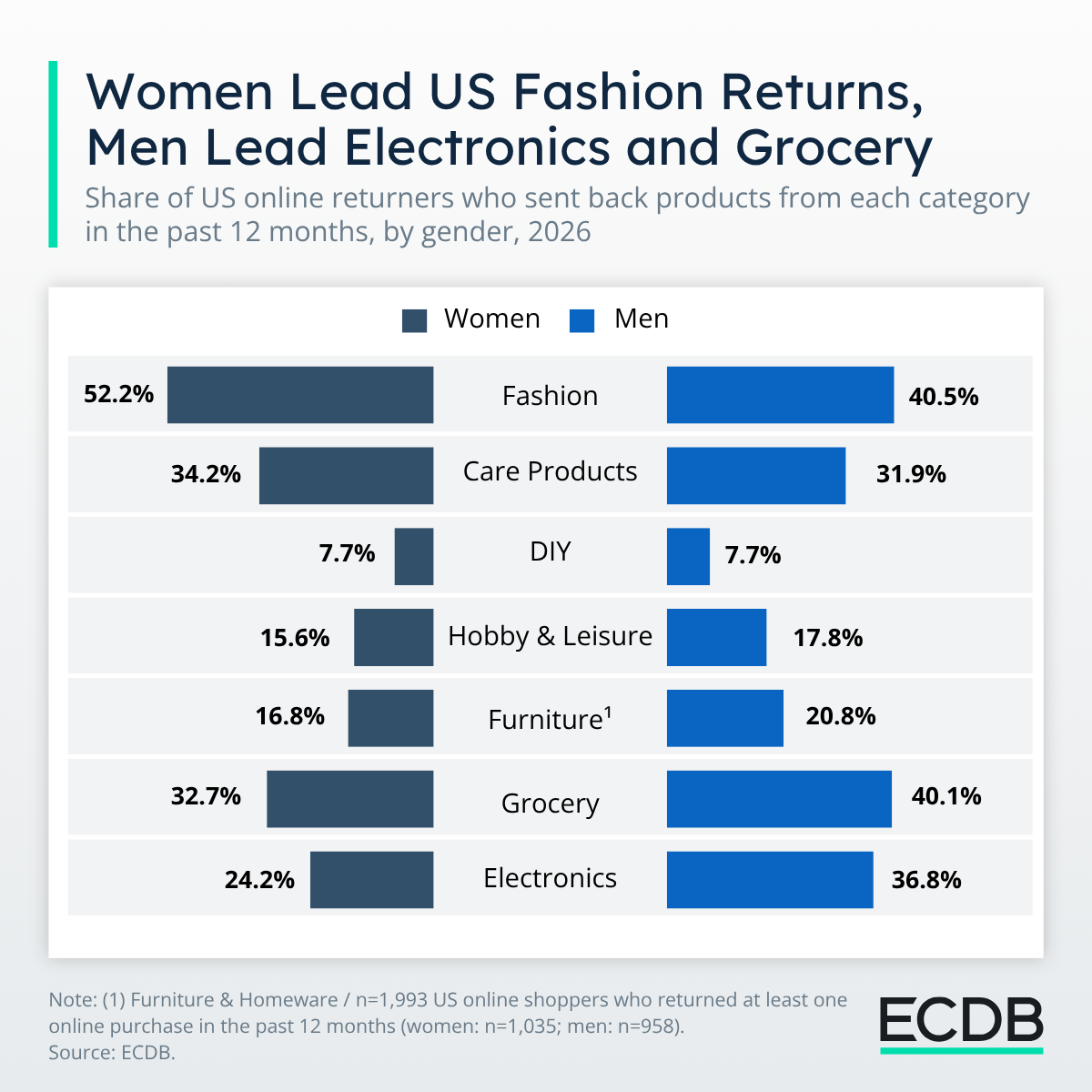
Return patterns track purchase patterns. The categories a group buys most online are also the ones where more orders head back to the store. For women, that means apparel, beauty and personal care. For men, it means devices, accessories and the weekly grocery order.
Wrap-Up: Returns Follow the Shopper
Who returns, what and how much depends on who is shopping. Age sets the rhythm. Younger shoppers return often and in small portions, older shoppers less often but with more of the order at stake. Category supplies the reason, from sizes that don't fit to produce that arrives spoiled. Gender follows the category mix.
The 22-year-old with three jacket sizes and the 60-year-old with one coffee machine land in the same return count. Their impact on the store differs widely. One return policy rarely fits every customer group.

Related Articles
All ArticlesReady to Unlock the Full Power of ECDB?
Book a demo to see how ECDB's market intelligence can support your business.