Younger Consumers Drive Low-Cost E-Commerce Growth: Temu, TikTok and Shein
Younger online shoppers plan to spend more on e-commerce, and their behavior is increasingly shaped by platforms designed for high-frequency purchases of small-ticket items.

Article in a Nutshell
Younger consumers lead growth in low-cost e-commerce, with 47% of 18–24-year-olds planning higher spend.
Intent declines with age, dropping to 32% among 45–54-year-olds and 17% for those over 65.
Temu stands out with broad cross-age adoption, likely driven by high media visibility and public debate.
Despite growth, consumers avoid cheap alternatives in key categories like electronics, care products, and groceries due to trust and quality concerns.
Younger consumers are planning to spend more on e-commerce this year. And in many cases, their shopping behavior is increasingly shaped by a set of up-and-coming platforms such as Temu, Shein, TikTok Shop, AliExpress, and Amazon Haul.
Not only do consumers buy more frequently this way, but they also spend more on online shopping than they would otherwise. Lower price points and highly frictionless discovery models facilitate the purchase decision.
But there are a few exceptions. On certain product categories, online shoppers are reluctant to use cheaper alternatives.
Almost Half of 18- to 24-Year-Olds Want to Increase Spend on Low-Cost Platforms
A recent survey among consumers in Germany showed a clear correlation between age and willingness to spend more money on emerging platforms Temu, Shein, TikTok Shop, AliExpress and Amazon Haul in 2026.
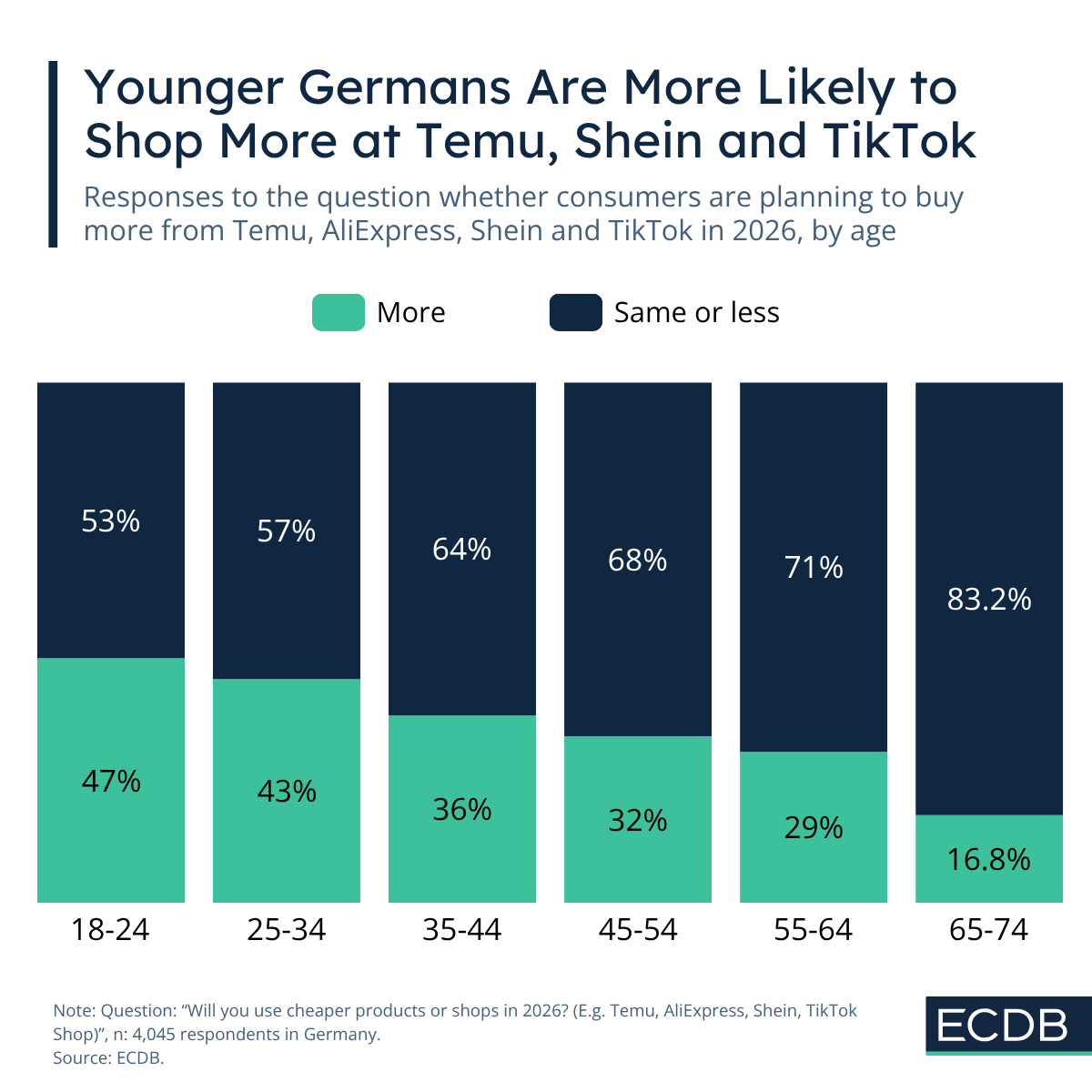
47% of users aged 18-24 said they plan on spending more on these platforms
That percentage decreases consistently across age groups
32% of 45-54-year-olds said they want to spend more on Temu and the likes
Only 17% of users above 65 agree.
That relationship is linear. But it is not the same for every platform. Some services lean heavily younger, while others show broader cross-generational reach.
Temu Is the Most Popular Site Across Age Groups
One of the most interesting findings is the consistency of Temu across demographics. Among older consumers who expect to shop more on low-cost platforms, over 70% mention Temu. The other platforms show a higher correlation with younger users.
Why Temu then?
A likely explanation is visibility. Temu has benefited from extensive media coverage, regulatory scrutiny, and public debate across multiple markets. This has increased awareness beyond younger, digitally native users.
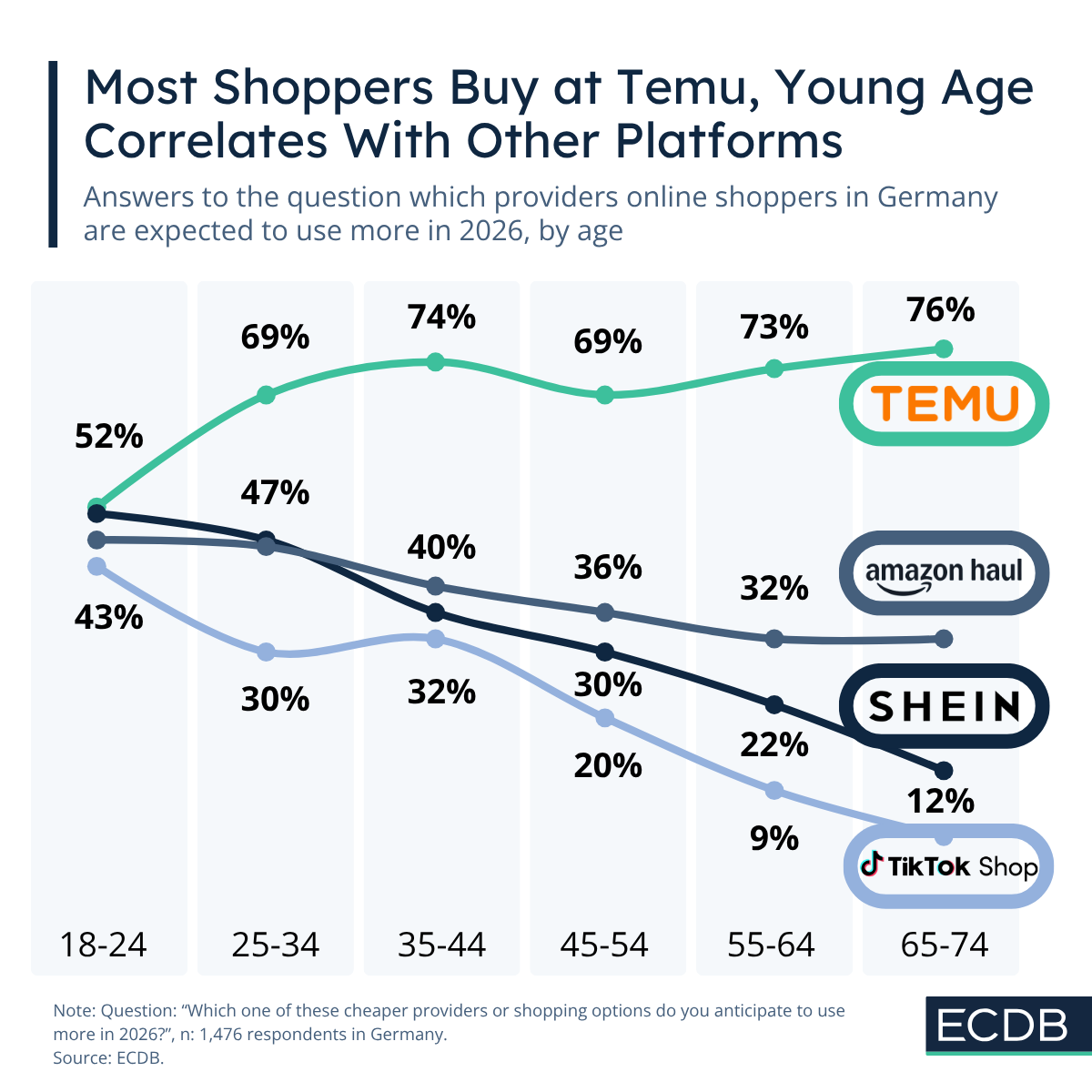
Amazon Haul still has around a third of older aged users going for it, but that percentage decreases for Shein and TikTok Shop, which are significantly more used by shoppers aged up to 35.
Electronics Is the Top Category Where Consumers Refuse to Trade Down on Price
Despite the rise of low-cost e-commerce platforms, consumers do not apply the same price sensitivity across all product categories. Especially for electronics, many users want to avoid low-cost alternatives due to concerns around quality, durability, and reliability.
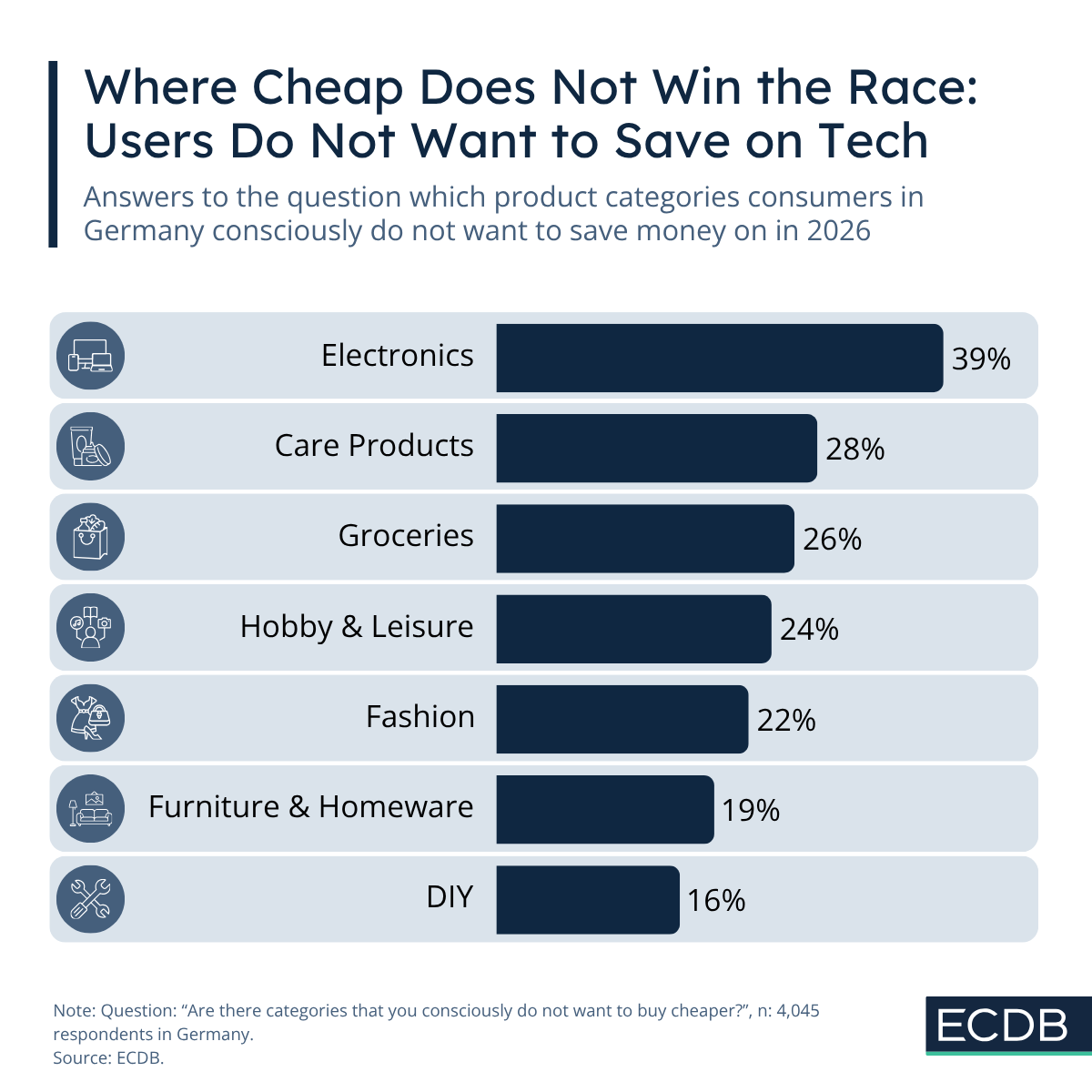
A little further at a distance, Care Products (28%) and Groceries (26%) follow. Both categories are closely tied to trust, safety, and everyday reliability.
Outlook: Low-Cost Platform and Age
Younger users do not necessarily spend more on e-commerce because of higher budgets, but because certain ecosystems emerged that make frequent online shopping more appealing and seem cheaper. Platforms like Temu, Shein, TikTok Shop, AliExpress and Amazon Haul lower the barrier to purchase and encourage more frequent, smaller transactions that accumulate into higher overall spending.
Visibility has played a major role in Temu's broad reach. Extensive media coverage, regulatory debate and public discussion have pushed the platform beyond its original digitally native audience and turned it into a broadly recognized entry point for low-cost e-commerce. In contrast, Shein, TikTok Shop and similar platforms remain much more closely tied to younger consumers, where social media discovery and creator-driven shopping behavior dominate adoption.
Related Articles
All ArticlesReady to Unlock the Full Power of ECDB?
Book a demo to see how ECDB's market intelligence can support your business.