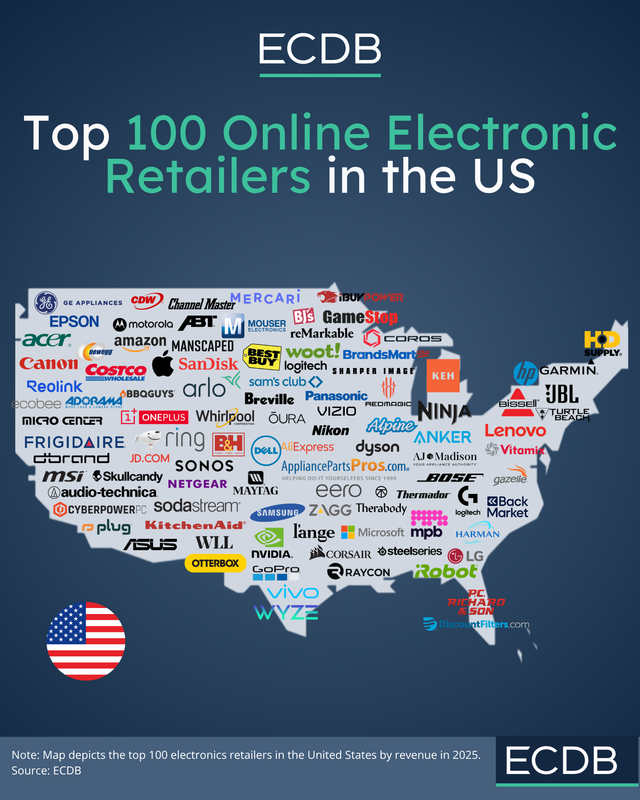
Electronics is now the largest e-commerce category in the United States, having overtaken fashion in 2025. With forecast revenues of US$252 billion in 2026, the category represents a share of 21.5% of all US online spending.
Here is how that category is distributed across the top 100 e-commerce retailers in the market.
Multiple Categories in One
The most common mistake when sizing the US electronics market is treating it as synonymous with consumer tech. In reality, it spans a wide cluster of converging product areas:
home appliances (KitchenAid, Whirlpool, Frigidaire, GE Appliances)
audio (JBL, Harman, Bose)
gaming hardware (iBuyPower, CyberPowerPC, GameStop)
and smart home devices and wearables (Ring, Arlo, Wyze, ecobee, eero, Oura, Coros, Therabody)
Anyone sizing this market with a narrow lens on consumer technology is missing a substantial portion of actual revenue.
The Direct-to-Consumer Shift
A significant share of electronics revenue is now flowing directly through brand-owned channels. Bose, Sonos, Dyson, Anker, Logitech, Dell, Garmin, HP, Samsung, GoPro, and Apple all operate D2C.
The line between brand and retailer has largely dissolved online, and it matters for how you measure market share: revenue-based analysis captures this; traffic-based rankings do not.
Specialists and the Resale Economy
Niche players like B&H, Adorama, Newegg, Micro Center, and KEH occupy meaningful positions in the market alongside refurbished and resale platforms like Back Market and Gazelle. Their revenue runs well ahead of their visit numbers, which makes them easy to overlook in rankings built on traffic data alone. In a $252 billion market, that is a costly blind spot.