June 2026 E-Commerce Recap: US$436.8 Billion in Global Revenue
The start of summer brought positive developments in June, with US$436.8 billion in global e-commerce revenues and a 9.5% year-on-year increase. Read on for the details below.

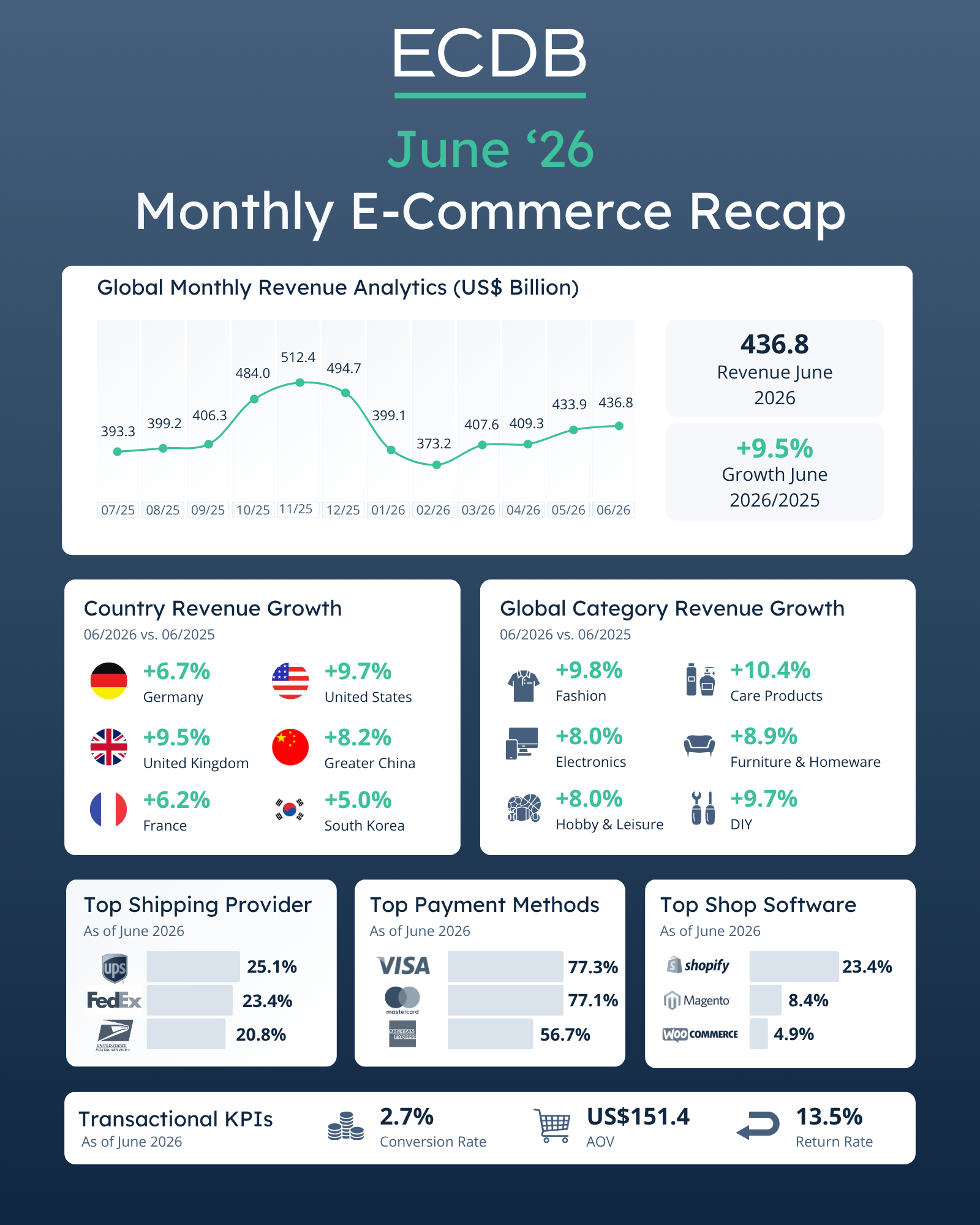
Global e-commerce revenue reached US$436.8 billion in June 2026, a 9.5% increase year over year. Growth was more moderate than in the previous month, but the headline number masks a category dynamic that deserves closer attention.
Care Products Lead the Way
Of all major categories, Care Products posted the strongest growth at 10.4%. That is not a coincidence. Quick commerce and social commerce have made everyday essentials more discoverable and easier to repurchase, and the data bears that out.
Further categories with high growth were:
The higher growth of these categories reflects typical summer behaviors such as stocking up on clothing and engaging in DIY projects.
The US Again Outpaces China
Regionally, the United States recorded 9.7% year-over-year growth in June, edging ahead of China at 8.2%. South Korea trailed at 5.0%. The US-China comparison is one worth tracking: for much of the past decade, Chinese e-commerce growth has set the pace globally.
Platform Adoption: Shopify Holds Its Lead
On the technology side, Shopify remains the dominant e-commerce platform with 23.4% store adoption globally. Magento follows at 8.4%, with WooCommerce at 4.9%. The gap between Shopify and its nearest competitors continues to be a defining feature of the platform landscape.
Outlook: Summery Introduction of E-Commerce Growth
June's full report also covers payment method trends, shipping performance, and transaction-level KPIs. As the summer season is usually one where e-commerce mellows down with peak temperatures outside, a 9.5% year-on-year growth rate is a solid basis for development.

Related Articles
All ArticlesReady to Unlock the Full Power of ECDB?
Book a demo to see how ECDB's market intelligence can support your business.