Poland vs. DACH/GSA: E-Commerce Category Mix Compared
Across Central Europe, the category mix shows a distinct pattern. Poland diverges from it. The reason lies in one simple fact: Maturity.

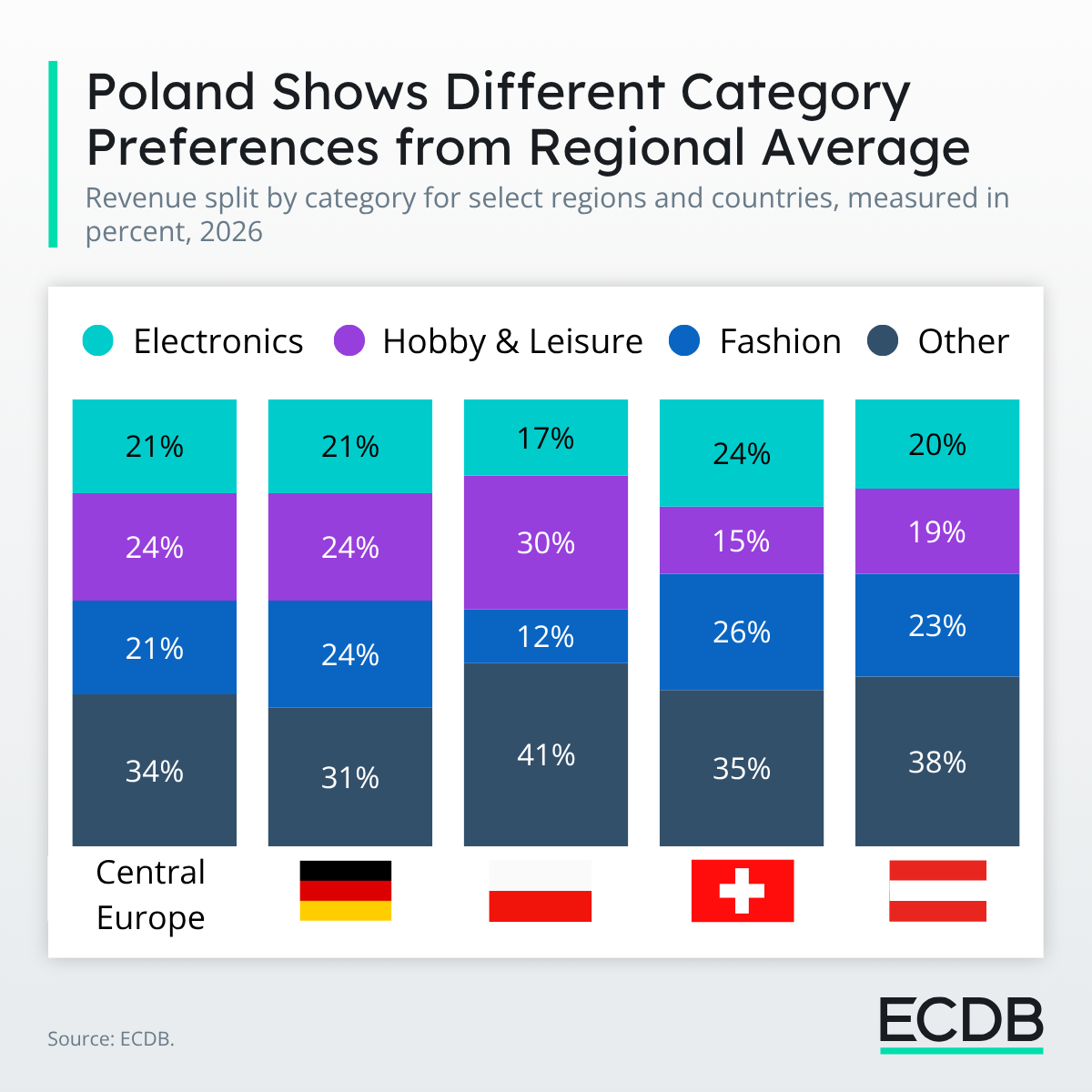
The Central European category mix looks similar in many places, shaped by comparable maturity levels and regional shopping habits.
The DACH/GSA region, Germany, Austria and Switzerland, shows converging category dynamics, with electronics and fashion as the two largest components of e-commerce spend in each market.
Poland breaks from that pattern entirely.
A Different Category Mix in Poland
In Germany, Fashion takes the largest share of e-commerce revenue at 25%, with Electronics close behind at 21%.
Switzerland and Austria follow a near-identical structure, with Fashion and Electronics each landing in the low-to-mid twenties and together accounting for roughly half of all online spend.
Poland's largest category is Hobby & Leisure instead, at 29% of e-commerce revenue, a group that spans sports equipment, pet supplies, toys, media and several smaller subcategories.
Electronics holds a smaller 18% share, and Fashion trails further still at just 12%, well below its weight in any of the three DACH/GSA markets.
Reason for the Difference: Maturity
Poland's offline retail still carries far more weight than e-commerce, at an online share of just 6.6% in 2025, well below Germany, Austria or Switzerland.
That leaves more rare, considered purchases to e-commerce, while frequent, routine ones stay with brick-and-mortar stores. Hobby & Leisure fits that pattern closely. It is a category built on considered, often one-off purchases, which is a large part of why it carries so much weight online in Poland.
Shoppers in the mature DACH/GSA markets show the opposite instinct. They already buy higher-ticket items such as electronics online as a matter of course, which reflects a level of trust in e-commerce, and a comfort with ordering pricier products sight unseen, that Polish shoppers have not built to the same extent yet.
Returns in Fashion Reflect the Dynamic
Fashion does not fit neatly into either story. It is frequent enough to behave like a routine purchase, yet moving it online depends on a specific kind of trust: free and easy returns that let a shopper order a few sizes of the same item and keep only one.
That trust shows up directly in the return-rate data.
Fashion return rates run at 18.6% in Germany,
19.2% in Switzerland,
17.35% in Austria,
all clearly higher than Poland's 15.02%.
A higher fashion return rate signals comfort with the buying experience: shoppers trust the process enough to over-order deliberately and send back whatever does not fit.
Wrap-Up: Category Mix Differences
The numbers show how maturity, consumer habits, and the pace of online adoption shape a market's e-commerce category mix. A country's category mix can reflect how comfortable shoppers have become with online ordering, which goes together with other KPIs like purchase frequency.
Poland's offline retail strength and its light electronics and fashion shares are two sides of the same hesitancy toward online shopping. Austria's and Germany's category mix closely mirrors the region's overall proportions, a sign of their maturity and established consumer habits.
Related Articles
All ArticlesReady to Unlock the Full Power of ECDB?
Book a demo to see how ECDB's market intelligence can support your business.