China Dominates Cross-Border E-Commerce in Nearly Every Major Market
Cross-border e-commerce shares vary from market to market, but one thing remains consistent: China's share of that total is enormous.

China's influence on world e-commerce is already substantial given the size of its domestic market. Its export performance is a whole other story.
Looking at cross-border purchases across virtually every major e-commerce market, China takes the lead in the large majority of them, and the lead is rarely a narrow one.
Market after market, Chinese exports account for the vast majority of purchases made abroad.
The Lead Isn't Close, Anywhere
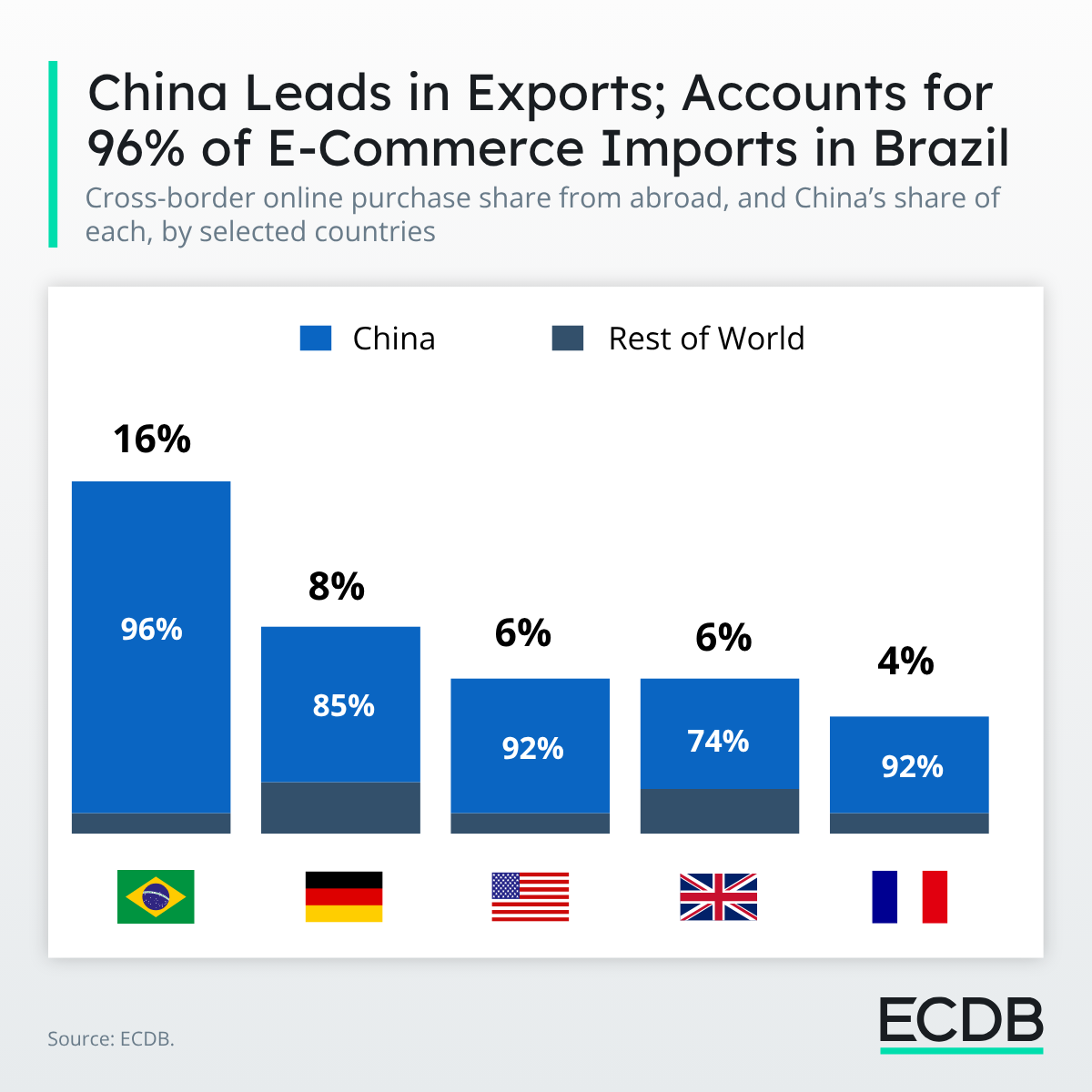
Consider Brazil, South America's largest e-commerce market. 16% of its e-commerce purchases are made abroad, and China accounts for 96% of that cross-border spend.
A similar pattern shows up in the United States and France, where China makes up 92% of e-commerce imports in both markets.
In Germany and the United Kingdom, the lead is a little more moderate, at 85% and 74% respectively, though still commanding by any standard.
These five markets are only a sample. Across the rest of the world, China's export leadership becomes even more evident, driven in large part by the rise of platforms such as Shein, AliExpress, and Temu.
The rise of these players has made ordering from Chinese sellers as routine as buying from a domestic retailers in many markets.
Tariffs: A Turning Point for the Export Model?
Recently introduced tariff adjustments are now testing how far that lead can carry. The low-value shipment exemptions that helped build China's export advantage are closing in two of its largest markets at once, raising the cost of the direct-to-consumer parcel model that platforms like Shein and Temu have relied on.
What fills that gap, price cuts, local warehousing, or a different playbook entirely, will shape the next phase of this story as much as the export numbers above already have.

Related Articles
All ArticlesReady to Unlock the Full Power of ECDB?
Book a demo to see how ECDB's market intelligence can support your business.